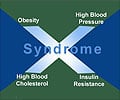
Metabolic syndrome is a term used for a group of risk factors that, if present together in a person, increase the risk of heart disease, stroke and diabetes. It is also known as Syndrome X or Insulin Resistance Syndrome. A person is said to be suffering from metabolic syndrome if he is positive for at least three of the following:
• A blood pressure greater than or equal to 130/85 mmHg
Metabolic Syndrome - About
Metabolic Syndrome is associated with sedentary lifestyle .It makes a person more prone to develop type 2 diabetes and coronary artery disease.
Metabolic Syndrome is associated with sedentary lifestyle .It makes a person more prone to develop type 2 diabetes and coronary artery disease.
• A large waist circumference
• Low HDL cholesterol levels
• Triglycerides greater than or equal to 150 mg/dL
Lifestyle changes including diet and regular exercise to bring about weight loss is recommended for metabolic syndrome. Medications may be required in some cases.
Advertisement

Quiz on Diabetes
Diabetes has replaced every other condition to become the fastest growing lifestyle disease, globally. This disease also impacts children. Some people are more inclined to develop diabetes than others. Do you belong to the high- risk group? Spend 5 minutes to find out.
Diabetes has replaced every other condition to become the fastest growing lifestyle disease, globally. This disease also impacts children. Some people are more inclined to develop diabetes than others. Do you belong to the high- risk group? Spend 5 minutes to find out.
A study was carried out to assess the benefit of physical activity in reducing deaths in adult patients of metabolic syndrome in Norway. A total of 13,449 people with metabolic syndrome and 36,890 without metabolic syndrome were included in the study. Deaths due to any cause as well as deaths due to cardiovascular diseases (diseases affecting the heart and blood vessels like heart attack and stroke) were recorded. Serum glucose levels were obtained. Physical activity was recorded based on data provided by patients and was classified as light or hard physical activity. Light and hard physical activity were also combined and graded as inactive, low, moderate and high physical activity.
Advertisement

Blood Pressure Chart
Blood pressure is the pressure of the blood flowing through your blood vessels against the vessel walls. Just by entering you age, you can get the accurate range of blood pressure value.
Blood pressure is the pressure of the blood flowing through your blood vessels against the vessel walls. Just by entering you age, you can get the accurate range of blood pressure value.
Individuals with metabolic syndrome were followed up for an average period of 10 years. During this time, 1,839 deaths were observed among the patients with metabolic syndrome. Deaths due to cardiovascular causes accounted for 26% of deaths in the younger age group and 43% in the older age group. Metabolic syndrome was associated with deaths due to cardiovascular causes as well as with deaths from all causes in the younger age group, whereas such association was not observed with the older age group.
The study also found that the risk of dying from all causes as well as cardiovascular causes was lower in case of more active people irrespective of their age. Even people with low levels of physical activity seemed to reap the benefits of activity as compared to those who were inactive.
The study thus indicates that physical activity helps to increase the lifespan of people suffering from metabolic syndrome, and hence they should be encouraged to lead an active life.
Reference:
1. Stensvold D, Nauman J, Nilsen TIL, Wisloff U, Slordahl SA, Vatten L. Even low level of physical activity is associated with reduced mortality among people with metabolic syndrome, a population based study (the HUNT 2 study, Norway). BMC Medicine 2011, 9:109
Source-Medindia