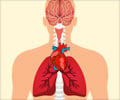
Tuberculosis together with HIV infections in adults is the leading cause of death in Africa. Tuberculosis is a deadly infectious disease caused by the tuberculosis bacteria which affects the lung and other parts of the body. Most infections are inactive and without any symptoms in the beginning but can progress to an active tubercular disease which can be fatal if left untreated.
AIDS or acquired immune deficiency syndrome, as the name suggests, is an infection caused by the virus HIV (human immunodeficiency virus). The AIDS virus attacks the body’s immune system causing a breakdown of the body’s protective force. This can cause serious life-threatening opportunistic infections.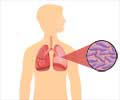
Tuberculosis - Spread - Symptoms - Diagnosis - Treatment - FAQs
Tuberculosis, caused by Mycobacterium tuberculosis, primarily affects the lung. It may spread to other organs.
Tuberculosis, caused by Mycobacterium tuberculosis, primarily affects the lung. It may spread to other organs.
Preventive therapy is imperative to prevent the progression of inactive tuberculosis to an active case in patients who are already immunocompromised with HIV infection. The developing and underdeveloped world is still sadly lacking in the provision of preventive treatment for tuberculosis in spite of the World Health Organization’s strong recommendations. Routinely, isoniazid is given for six months to patients to avert TB. However, most public health programs which resolve to avert the symptomatic development of tuberculosis fail because of low completion rates, re-infection of tuberculosis and drug resistance.
A recent comparative clinical study was conducted in Soweto, South Africa by Richard Chaisson, MD and his associates from the Johns Hopkins Medical Institute in Baltimore, Maryland. This study was done to observe three different new tuberculosis prevention treatments as apposed to the standard regimen of isoniazid for a period of 6 months.

Quiz on HIV / AIDS
Statistics tell us that the world HIV+ population has risen drastically from 8 million in 1990 to a whopping 33 million in 2007! Even more alarming is the fact that young people (below the age of 25) account for half of these infections! This is adequate proof for the lack of awareness among the general public even in these modern times. So take our quiz and brush up on the essential facts of HIV/AIDS.
There are 10 questions on HIV / AIDS in this quiz that will explore the depth of your knowledge and provide answers to the following:
Statistics tell us that the world HIV+ population has risen drastically from 8 million in 1990 to a whopping 33 million in 2007! Even more alarming is the fact that young people (below the age of 25) account for half of these infections! This is adequate proof for the lack of awareness among the general public even in these modern times. So take our quiz and brush up on the essential facts of HIV/AIDS.
There are 10 questions on HIV / AIDS in this quiz that will explore the depth of your knowledge and provide answers to the following:
- Immune control of HIV ()
- Symptoms of HIV/AIDS ()
- Cure for AIDS ()
- Acute HIV syndrome ()
- World AIDS day ()
- Western blot ()
Advertisement
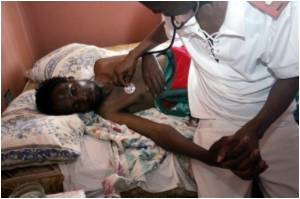
HIV/TB Co-epidemic Halves Life Expectancy in Swaziland
Twin epidemics of AIDS and tuberculosis are ravaging Swaziland, helping to halve life expectancy to 31 years, Medecins Sans Frontieres said Thursday, warning of a health emergency.
Twin epidemics of AIDS and tuberculosis are ravaging Swaziland, helping to halve life expectancy to 31 years, Medecins Sans Frontieres said Thursday, warning of a health emergency.
The results of the study indicate that there was no remarkable difference in the incidence of development of active tuberculosis or death between any of the three groups treated with newer drug regimens and those taking isoniazid alone daily for 6 months (the control group). However, there were grave unfavorable adverse effects observed with patients taking continuous isoniazid daily for 6 years. Other serious adverse effects were also seen in the groups with newer drug regimens but to a lesser extent. These results show that these newer prophylactic or preventive medication regimens against tuberculosis in a HIV infected adult or even the use of continuous isoniazid for 6 years do not show better or more superior results compared to those taking isoniazid alone for only 6 months.
Advertisement

Tuberculosis Ravages HIV/AIDS Patients, Warns WHO
The World Health Organisation warned that progress in tackling tuberculosis was far too slow, as it doubled its estimate of the ravages the disease is causing among HIV/AIDS patients.
The World Health Organisation warned that progress in tackling tuberculosis was far too slow, as it doubled its estimate of the ravages the disease is causing among HIV/AIDS patients.
Source-Medindia