High blood pressure increases the risk of developing stroke. Patients with hypertension often have stiffened arteries, due to deposition of cholesterol, the condition known as atherosclerosis. Very high blood pressure could also lead to bleeding within the brain, resulting in stroke. Treatment of hypertension is associated with a decrease in stroke. However, it is not yet clear whether reducing blood pressure in patients who have already suffered from a stroke is beneficial.
Patients who suffer from stroke often have a high blood pressure. The high blood pressure in these patients could be due to prior hypertension, stress, damage to the brain or a rise in pressure around the brain. High blood pressure in stroke patients has been shown to increase the risk of brain edema and bleeding in the brain. However, some researchers feel that reducing blood pressure in such patients lead to decrease in blood supply to the brain and can further worsen stroke. Studies with a calcium channel blocker nimodipine have indicated that reduction of blood pressure in stroke patients can further add to the damage.Candesartan is a blood pressure lowering drug belonging to the group of angiotensin II receptor blockers. A recent study was conducted to find out if candesartan provides benefit in stroke patients by reducing blood pressure. The patients were followed to determine if they experienced changes in functional outcomes or if they suffered from further complications like stroke, heart attack and death.
The researchers found that reducing blood pressure does not provide beneficial effects in these patients. In fact, it may have some harmful effect especially in functional outcomes.
Further studies using different blood pressure lowering drugs may be required to establish their role in the treatment of stroke.
Reference
- Harrison’s Principles of Internal Medicine 17th edition
- The angiotensin-receptor blocker candesartan for treatment of acute stroke (SCAST): a randomised, placebo-controlled, double-blind trial. The SCAST Study Group. The Lancet, Volume 377, Issue 9767, Pages 741 - 750, 26 February 2011
High Blood Pressure | Hypertension - Causes, Symptoms, Diagnosis & Treatment
High blood pressure or hypertension is a chronic condition, which usually lasts a lifetime once it is developed.
High blood pressure or hypertension is a chronic condition, which usually lasts a lifetime once it is developed.
Stroke – Early Warning Signs - Risk Factor - Rehab - Treatment
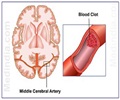
Stroke can cause permanent disability and it is important to recognize its early warning signs to stop its progress. Early warning signs of stroke include sudden weakness of facial muscles.
Stroke can cause permanent disability and it is important to recognize its early warning signs to stop its progress. Early warning signs of stroke include sudden weakness of facial muscles.

Candesartan
This medication is an angiotensin II receptor antagonist, prescribed for high blood pressure. It blocks the action of certain chemicals that tighten the blood vessels, so blood flows more smoothly. High blood pressure reduction helps prevent strokes, heart attacks, and kidney problems.
This medication is an angiotensin II receptor antagonist, prescribed for high blood pressure. It blocks the action of certain chemicals that tighten the blood vessels, so blood flows more smoothly. High blood pressure reduction helps prevent strokes, heart attacks, and kidney problems.

News
A new study has revealed that soda and other sugar-sweetened beverages such as fruit drinks are associated with higher blood pressure levels in adults.
A new study has revealed that soda and other sugar-sweetened beverages such as fruit drinks are associated with higher blood pressure levels in adults.