Ginkgo biloba extract could bring down the risk of heart disease in diabetes patients, suggests studies.
Ginkgo biloba L. is one of the oldest known herbal remedies and has a number of medicinal properties. It is used for chronic cough and loss of bladder control. An extract prepared from Ginkgo biloba leaves called EGb761 contains flavinoids and terpenes. This extract has been used to treat circulation problems and to increase memory. The flavinoid portion has antioxidant properties whereas the terpene portion reduces platelet activation and aggregation, thus improving circulation. A component of the terpene portion has been shown to reduce swelling and damage to the brain in stroke patients. Thus, EGb761 has protective effects on the brain as well as blood vessels. In addition, EGb761 also helps to reduce blood glucose in diabetic patients.
Type 2 Diabetes - Risk Factors - Symptoms & Signs - Management - Prevention
Globalization and changing lifestyles has made diabetes very common in developing countries so much so that India is known as the Diabetes Capital of the World.
Globalization and changing lifestyles has made diabetes very common in developing countries so much so that India is known as the Diabetes Capital of the World.
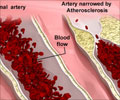
The study was conducted on rats with obese type 2 diabetes. The rats were divided into three groups of 12 rats each. One group served as a control whereas the other two were administered 100mg/kg and 200 mg/kg of EGb761 per day for 6 weeks’ duration. At the three-week mark, the carotid arteries of the rats were damaged using standard techniques. Damage to a portion of an artery favors the deposition of cholesterol and formation of a plaque. The plaque then continues to grow and occludes the artery.
The researchers found that rats treated with EGb761 showed a decrease in plaque formation following the injury. This was more significant in rats on a higher dose of EGb761 i.e. 200 mg/kg/day. Cell proliferation was lower and apoptosis of the muscles of the blood vessels was higher in the EGb761 groups. Inflammation was also lower in the EGb761 groups. Other parameters were also tested, the results of which reinforced the antiatherogenic properties of EGb761.

High Cholesterol | Hypercholesterolemia - Causes, Symptoms, Diagnosis & Treatment
High cholesterol level in blood are a risk for heart disease and stroke. They get deposited in the wall of the arteries and clog the circulation posing a threat to life.
High cholesterol level in blood are a risk for heart disease and stroke. They get deposited in the wall of the arteries and clog the circulation posing a threat to life.
Reference:
Advertisement

Alzheimer's Risk Reduced by Ginkgo Biloba Extract
The risk of Alzheimer's disease can be reduced by 47 percent with the long term use of ginkgo biloba extract, claims a new study.
The risk of Alzheimer's disease can be reduced by 47 percent with the long term use of ginkgo biloba extract, claims a new study.
http://www.plosone.org/article/info%3Adoi%2F10.1371%2Fjournal.pone.0020301#s1
Source-Medindia

Japanese Diabetes Drug Reduces Atherosclerosis: Study
A drug produced by a Japanese laboratory is the first to have shown it can help reduce the hardening of the arteries and help combat heart disease, according to a study released Monday.
A drug produced by a Japanese laboratory is the first to have shown it can help reduce the hardening of the arteries and help combat heart disease, according to a study released Monday.