Schizophrenia or “split personality disorder” as some may call it, is a chronic and debilitating mental illness which is characterized by disintegration in the process of thinking and emotional responsiveness. Corresponding to the psychotic behavior of such patients, the person's thinking is completely out of touch with reality.
The causes of schizophrenia are still unknown and hence the treatment focuses mainly on eliminating symptoms of the disease and is based on antipsychotic medications and psychosocial interventions. The treatment does work wonderfully in most instances; however relapse is of a major concern among caregivers.
About Schizophrenia
Schizophrenia is a mental disorder characterized by symptoms of thought, behavior and social problems.
Schizophrenia is a mental disorder characterized by symptoms of thought, behavior and social problems.
The researchers reviewed the subject and noticed that patients whose families received the interventions were less likely of a relapse. It has been observed that there is greater probability of relapse in people who have schizophrenia when their families exhibit high levels of hostility, criticism, and over indulgence towards them. New psychosocial interventions aim to reduce such potentially negative emotions, although their effectiveness has yet to be proved.
Data collected from 53 trials involving 4,708 patients has been reviewed by researchers. The above said interventions lasted from six weeks to three years and it involved a variety of psychosocial techniques that aimed at reducing stress and levels of negative emotions. It also proposed at helping family members to solve patient’s problems.

Schizophrenic Relapse Avoided With Change in Family Behavior
Schizophrenic patients could find a change in the behaviour of family members an effective treatment for thier problem, reports a new Cochrane systematic review.
Schizophrenic patients could find a change in the behaviour of family members an effective treatment for thier problem, reports a new Cochrane systematic review.
Out of the 53 such trials, results from 32 depicted that for every seven patients whose relatives were given family interventions, at least one got benefited as compared to the control groups. There was also a significant drop in the hospital admissions over the year. Family intervention also improved patients’ social functioning and encouraged them to stick to drug treatment regimes.
Advertisement
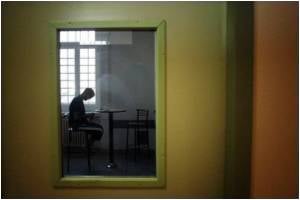
New Brain Research Could Hold Cure For Schizophrenia
New research has revealed that two neurotransmitters-dopamine and glutamate-are abnormal in people with psychotic illness, including schizophrenia.
New research has revealed that two neurotransmitters-dopamine and glutamate-are abnormal in people with psychotic illness, including schizophrenia.
Co-author of the study Dr. John Rathbone of the Health Economics and Decision Science department at the University of Sheffield pointed out that “We still need a better designed large study to settle arguments about this widely used therapy.” He further added, “Some of the important data within the studies that were reviewed were poorly reported and patients might have reason to feel let down by the research community in these cases.”
Advertisement

Study Sheds Light on Schizophrenia and Psychotic Syndromes
It is well-known that schizophrenia and related psychotic disorders are a chronic and often disabling condition.
It is well-known that schizophrenia and related psychotic disorders are a chronic and often disabling condition.