Following a prudent diet, a regular exercise regime and a healthy lifestyle can go a long way in preventing high cholesterol and many related heart diseases. Cholesterol and triglycerides are two forms of lipids (fats) that circulate in the bloodstream and perform necessary functions in the body.
Cholesterol and triglycerides are endogenously manufactured by the body and are also greatly obtained from fatty foods and oils. When the blood levels of cholesterol becomes too high, the risk of developing heart disease increases significantly.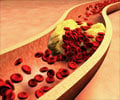
High Cholesterol | Hypercholesterolemia - Causes, Symptoms, Diagnosis & Treatment
High cholesterol level in blood are a risk for heart disease and stroke. They get deposited in the wall of the arteries and clog the circulation posing a threat to life.
High cholesterol level in blood are a risk for heart disease and stroke. They get deposited in the wall of the arteries and clog the circulation posing a threat to life.
LDL & HDL - the Bad and Good Cholesterol
Lipoproteins are of various types. LDL stands for "low density lipoprotein,” and carries cholesterol to various tissues. When the LDL cholesterol levels are too high in the blood, the LDL lipoprotein tends to stick to the lining of the blood vessels and consequently stimulates atherosclerosis. An elevated LDL cholesterol level is a major risk factor for heart ailments and is therefore addressed as "bad" cholesterol.
HDL, or high density lipoprotein removes excess cholesterol from the tissues. So the cholesterol present in HDL is to a large extent the excess cholesterol that has been removed from cells and blood vessel walls, and is being transported back to the liver for processing. The higher the HDL cholesterol, presumably, more cholesterol is being scavenged from the cells and blood vessels where it might otherwise cause damage. It is the “good” cholesterol. In most people, the majority of the cholesterol in the blood is packaged as LDL, and only a small proportion is present as HDL.
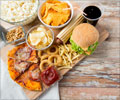
Cholesterol rich foods (organ meat especially brain, butter, ghee, egg yolk, chicken with skin, prawns and shrimps), saturated fats (meat, poultry skin, coconut, palm oil, full cream dairy products, ghee, margarine, butter, cream and mayonnaise) and trans fats (found in cookies, biscuits, cakes, fried snacks and wafers) should be consumed with some discretion and in moderation. These dietary fats raise cholesterol levels, clog arteries, and increase the risk for heart disease.
Advertisement
Aerobic Exercise & Reduction of Cholesterol & Heart Disease
Advertisement

Patients at Heart Disease Risk Benefited by Diet, Exercise Intervention
An intervention delivered in a primary care setting aimed at getting patients at risk for heart disease to increase their physical activity and improve their diet improves quality of life
An intervention delivered in a primary care setting aimed at getting patients at risk for heart disease to increase their physical activity and improve their diet improves quality of life
The study included nine electronic databases, cross-referencing, and expert review of randomized controlled trials involving interventions of more than 4 weeks in adults.
The results showed statistically significant reductions for:
· Total Cholesterol
· LDL cholesterol
· Total cholesterol: HDL cholesterol and
· Triglycerides
There was no significant decrease in the HDL cholesterol.
The study suggests that the combined effect of both, a prudent diet and regular aerobic exercise, is efficacious for reducing the levels of total cholesterol, LDL cholesterol and triglycerides. By ‘prudent’ diet, the authors mean ‘a diet in which saturated/trans fat intake is less than approximately 10 percent of total calories and cholesterol is less than 300 mg/day and/or fiber intake is 25 g/day or more in women and 35 g/day or more in men’.
These findings appear to be important from a practical perspective, especially in relation to the prevention of coronary heart disease (CHD), a disease with an annual estimated incidence rate of more than 1.4 million people in the United States.
Taking into account that every 1 percent reduction in total cholesterol levels results in approximately 2 percent reduction in the rate of CHD, this study found that aerobic exercise along with a prudent diet would result in 15 percent reduction in the rate of CHD.
Similarly, the decrease in the total cholesterol and high density lipoprotein cholesterol (HDL-C) ratio with this module, translates into approximately 21 percent in the CHD risk. The reduction in low density lipoprotein cholesterol (LDL-C) is equivalent to 7 percent in the 12-year incidence of CHD.
According to the study, findings support the current recommendations regarding the use of aerobic exercise and a prudent diet as a first line strategy for maintaining optimal concentrations of lipids and lipoproteins in adults. If optimal levels cannot be attained, aerobic exercise and diet are still recommended with the possible addition of fibrates or niacin for increasing HDL-C and/or a statin for improving all other lipid and lipoprotein concentrations, especially LDL-C.
In addition, a statistically significant increase in VO2max in ml.kg-1.min-1 was also observed. This finding is not surprising given that weight loss and increase in cardio respiratory fitness is a common change that occurs as a result of aerobic exercise.
Undoubtedly, adopting a few precautionary changes in the diet and lifestyle such as
· Avoiding saturated and trans fats,
· Eating plenty of fruits and vegetables,
· Avoiding alcohol,
· Losing weight,
· Following a regular exercise regime,
· Quit smoking,
· Controlling blood sugar and blood pressure
can go a long way in preventing increase of cholesterol and many related heart disorders.
Reference:
Efficacy of Aerobic Exercise and a Prudent Diet for Improving Selected Lipids and Lipoproteins in Adults: A Meta-Analysis of Randomized Controlled Trials; George A Kelly et al; BMC Medicine 2011
Source-Medindia