Patients with silent atrial fibrillation are at a risk of suffering from subsequent stroke, according to the Asymptomatic AF and Stroke Evaluation in Pacemaker Patients and the AF Reduction Atrial Pacing Trial (ASSERT). //
We all know that the heart beats continuously at a regular rate and rhythm. The upper chambers of the heart are called the atria (single, atrium) and the lower chambers called the ventricles. The impulse for the heart beat starts in a group of cells called the SA node located in the right atrium. This causes the atria to contract and empty the blood into the ventricles. The impulse also reaches another point called the AV node that is located between the atria and the ventricles. The impulses from AV node are carried through the ventricles allowing them to empty the blood.
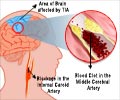
Stroke-I
The two broad categories of stroke, hemorrhage and ischemia are diametrically opposite conditions. Hemorrhage is characterized by too much blood within the closed cranial cavity.
The two broad categories of stroke, hemorrhage and ischemia are diametrically opposite conditions. Hemorrhage is characterized by too much blood within the closed cranial cavity.
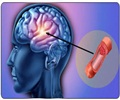
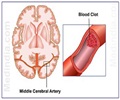
The pumping activity of the atria is thus disturbed in atrial fibrillation, resulting in pooling of blood in the atria. This stagnation of blood can result in the formation of blood clots. The blood clots may travel to the brain resulting in stroke.
Atrial fibrillation can cause symptoms of chest pain and sometimes heart failure. However, in some patients, it may not cause any symptoms at all. This subclinical atrial fibrillation can be detected with the help of pacemakers or defibrillators.
Six P’s to watch out in Atrial Fibrillation
Medindia lists down the six P’s to watch out in atrial fibrillation. Atrial fibrillation is common cardiac arrhythmia, it has no symptoms but associated with chest pain and congestive heart failure.
Medindia lists down the six P’s to watch out in atrial fibrillation. Atrial fibrillation is common cardiac arrhythmia, it has no symptoms but associated with chest pain and congestive heart failure.
The study found that patients who suffered from subclinical atrial arrhythmias were at an increased risk of nearly two and a half times of suffering from stroke or embolism (presence of a clot in the blood) during the follow-up period.
Advertisement

Flecainide in Atrial Fibrillation is Safe and Effective Shows Study
Atrial fibrillation is one of the leading causes of abnormal heart rhythm and an old drug calked Flecainide is safe to treat this condition.
Atrial fibrillation is one of the leading causes of abnormal heart rhythm and an old drug calked Flecainide is safe to treat this condition.
Reference: 1 Subclinical Atrial Fibrillation and the Risk of Stroke; Jeff S. Healey et al. N Engl J Med 2012; 366:120-129.
Advertisement
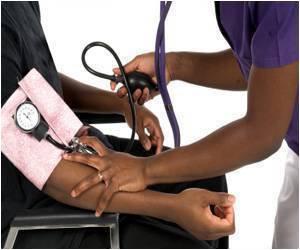
Upper-normal BP Elevates Atrial Fibrillation Risk in Middle-aged Men
A new research has found that middle-age men with upper end of normal blood pressure are at an increased risk of suffering from atrial fibrillation later in life.
A new research has found that middle-age men with upper end of normal blood pressure are at an increased risk of suffering from atrial fibrillation later in life.