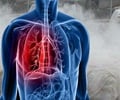
Massive acute bleeding in the lung, called pulmonary hemorrhage (PH), is a fatal complication seen in lung cancer patients treated with chemotherapy and/or radiotherapy. A recent study has unveiled the risk factors that predispose patients to pulmonary hemorrhage; major lung cavities and squamous cell variant of lung cancer are independently associated with PH.
Chemoradiotherapy, a combination of chemotherapy and radiotherapy, is a widely used mode of treatment for patients with lung cancer. In patients with locally advanced non-small cell lung cancer (NSCLC), this mode of therapy is known to provide better survival. However, pulmonary hemorrhage is a commonly observed serious event in these patients. The exact risk factors for this complication were unknown so far.
Lung Cancer - Types, Causes, Symptoms, Diagnosis, Treatment and Prevention
Lung cancer is a malignant tumor in the lung tissues. Smoking is the main cause of lung cancer with symptoms like recurrent respiratory diseases.
Lung cancer is a malignant tumor in the lung tissues. Smoking is the main cause of lung cancer with symptoms like recurrent respiratory diseases.
The study also found that risk of bleeding may be traced to microscopic pattern of lung cancer. The type of lung cancer called squamous cell carcinoma is associated with PH. Researchers state that ‘squamous cell histology is associated with PH, independent of tumor location or the presence of cavitation’. The idea that molecular characteristic alone can serve as a risk factor for pulmonary hemorrhage is new..
Patients of lung cancer who have both the risk factors, squamous cell type of lung cancer and presence of major cavitation, are at a high risk of bleeding leading to death.

Quiz on Lung Cancer
Lung cancer and smoking are closely associated. Lung cancer risk increases with the intensity of smoking. For more details, take this quiz.
Lung cancer and smoking are closely associated. Lung cancer risk increases with the intensity of smoking. For more details, take this quiz.
Researchers believe that the data collected from the current study may aid future trials.
Advertisement

Sirolimus Effective in Treatment of a Rare Type of Lung Cancer (LAM)
Research has revealed that therapy with sirolimus may be useful in selected patients with Lymphangioleiomyomatosis.
Research has revealed that therapy with sirolimus may be useful in selected patients with Lymphangioleiomyomatosis.
Source-Medindia
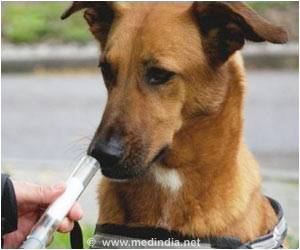
Trained Sniffer Dogs Help to Screen Lung Cancer
Scientists in Germany have discovered that sniffer dogs are very reliable when it comes to detecting lung cancer.
Scientists in Germany have discovered that sniffer dogs are very reliable when it comes to detecting lung cancer.