Children who are exposed to people infected with multidrug resistant tuberculosis may benefit from prevention programs, suggest study.
Prevention is always better than cure especially in the case of fatal diseases where the causative agents remain resistive to many therapeutic drugs and the treatment is expensive.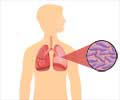
Tuberculosis - Spread - Symptoms - Diagnosis - Treatment - FAQs
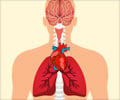
Tuberculosis, caused by Mycobacterium tuberculosis, primarily affects the lung. It may spread to other organs.
Tuberculosis, caused by Mycobacterium tuberculosis, primarily affects the lung. It may spread to other organs.
Exposure to MDR Mycobacterium tuberculosis makes the children highly susceptible to infection, which progresses to disease within a year in 90% of the cases. Infants with HIV infection are 20 times more likely to acquire the tuberculosis disease. This had prompted a team of researchers to explore the available treatment options, methodologies and guidelines to prevent the disease in children exposed to MDR tuberculosis bacterium.
According to the review a prevention program is more beneficial to children living under the same roof along with the person infected with MDR tuberculosis disease.
Novel Tuberculosis Research Technology Promises New TB Treatments
Researchers at the University of Pittsburgh have been developing a new way of culturing tuberculosis bacteria, which could lead to new insights and treatments for TB.
Researchers at the University of Pittsburgh have been developing a new way of culturing tuberculosis bacteria, which could lead to new insights and treatments for TB.
The various International guidelines for prevention of the disease in children who are in close proximity with patients inflicted with the MDR tuberculosis disease are as follows.
Advertisement

Global Health Threatened by Multidrug-resistant TB
The World Health Organisation has issued a warning that the dangerous multidrug resistant tuberculosis is fast becoming a serious threat to global health.
The World Health Organisation has issued a warning that the dangerous multidrug resistant tuberculosis is fast becoming a serious threat to global health.
• The National Department of Health of South Africa recommends a high-dosage (15 mg/kg) of isoniazid to children below 5 years.
Advertisement

Screening Tests for Tuberculosis
Tuberculin skin test and Interferon – Release Assays are tests used to screen for tuberculosis.
Tuberculin skin test and Interferon – Release Assays are tests used to screen for tuberculosis.
The authors also recommend a high dose of isoniazid for a period of six months.
Parents and children need to be counseled about the benefits of the preventive treatment and the need to follow the prescriptions for the treatment to be successful.
HIV infection in children influences the initiation of the preventive program for MDR tuberculosis. When the child is simultaneously diagnosed with HIV infection and exposed to MDR tuberculosis bacterium, it is suggested to begin the preventive treatment before the initiation of the antiretroviral treatment.
Children infected with HIV often suffer from chronic diarrhoea, which could affect the absorption of MDR Tuberculosis Preventive treatment and HIV treatment.
The adverse effects of the drugs, other factors influencing the treatment in children still remain unexplored.
With MDR tuberculosis disease rising at an alarming rate the experts feel there is a critical need for in-depth research to assess the effectives of the drugs and treatment in order to control the disease.
Reference: Management of children exposed to multidrug-resistant Mycobacterium tuberculosis; The Lancet Infectious Diseases Feb 2012.
Source-Medindia