Oh, say! What is that thing called light, which I must never enjoy? What are the blessings of the sight? Oh, tell your poor blind boy! - Colley Cibber
World Sight Day (WSD), held on the second Thursday of October every year, is an attempt to attract world attention on vision impairment and blindness. The fundamental goal of WSD is to take stock of the extensive problem of preventable blindness as well as rehabilitation of the visually impaired.
Quiz on Eye
The eyes are the most complex part of the body after the brain. To learn more about the eye, its functions and the diseases that affect the eye participate in this quiz.
The eyes are the most complex part of the body after the brain. To learn more about the eye, its functions and the diseases that affect the eye participate in this quiz.
The Right to Sight campaign spearheaded by the International Agency for the Prevention of Blindness and the World Health Organization will solicit the effort of the international network of NGO’s, and several similar institutions to completely obliterate avoidable blindness by 2020.
Blinding Statistics

Nearly 37 million people around the globe are unable to differentiate between darkness and light – they are completely blind. Almost 124 million people carry fears of a bleak future as they suffer low vision. It is observed that men and women over 50 years of age are vulnerable to visual impairment. Nearly 90% of people who go blind are from the developing countries. The main causes of chronic blindness are glaucoma, diabetic retinopathy, cataract, trachoma, and age-related macular degeneration. Children could face problems in their vision due to deficiency of Vitamin A.
Advertisement
LASIK Surgery – Interesting Facts
LASIK is a combined microsurgical and excimer laser procedure for correcting refractive errors of the eyes. Refractive surgery procedures include corrections for nearsightedness, farsightedness, astigmatism and presbyopia. Here are some interesting facts on LASIK surgery.
LASIK is a combined microsurgical and excimer laser procedure for correcting refractive errors of the eyes. Refractive surgery procedures include corrections for nearsightedness, farsightedness, astigmatism and presbyopia. Here are some interesting facts on LASIK surgery.
• Six million people are blind due to Trachoma, a serious infection which could eventually cause the victim’s eye lashes to turn inwards and hurt the eye with every blink.
Advertisement
Glaucoma - Causes, Symptoms, Diagnosis, Treatment & Prevention
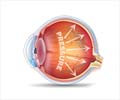
Glaucoma is a group of disorders involving the optic nerve, often associated with a rise in intraocular pressure. Uncontrolled glaucoma can lead to blindness.
Glaucoma is a group of disorders involving the optic nerve, often associated with a rise in intraocular pressure. Uncontrolled glaucoma can lead to blindness.
• Refractive errors account for about 5 million people with impaired vision. Many of them continue to suffer low vision as they are unable to afford spectacles. These can be remedied with timely optical correction.
Let Children See the World
"The chief handicap of the blind is not blindness, but the attitude of people towards them." Helen Keller
There are nearly 1.4 million young whose childhood stands marred by blindness. According to a WHO statistic nearly 75% of the world’s blind children belong to the underprivileged regions of Asia and Africa.
Childhood blindness may be the result of a cluster of diseases manifesting during childhood or during the onset of puberty. If untreated, this could lead to severe impairment of vision that is seldom revocable. Congenital abnormalities, for example, cataract, retina dystrophies and glaucoma is a worldwide phenomenon resulting in visual impairment or even blindness. One of the prominent causes of blindness in children is deficiency of Vitamin A. The solution is simple and inexpensive and well within reach- Vitamin A supplements.
Further, 60% of children who lose their sight do not survive beyond a year of their blindness. Among those who survive, almost 90% of them are unable to blossom like normal children and are nipped in the bud due to the disability.
It is here that timely medical intervention could play a crucial role in enabling timely remedies for chronic eye problems and save children from completely losing vision.
Let There Be Light – VISION 2020
80% of blindness is preventable with timely examination and proper treatment.
More than 75% of adults who go blind cannot lead fulfilling lives; they cannot be employed and this can have a huge impact on their lives. For children who go blind, it is akin to nipping their life in the bud. Close to 90 % of blind children do not attend school, especially in developing and under developed countries. The ray of hope is that more than 100 million people could be saved if the objectives of VISION 2020 see the light of day.
VISION 2020 teams across the world have been distributing many millions of Vitamin A capsules on an annual basis in regions where deficiency is the leading cause of child blindness. Further, pediatric eye care services are also being spruced up on a war footing. Vision 2020 is also involved in providing low cost options to correct refractive errors especially in underprivileged areas.
Helen Keller said, "The most beautiful world is always entered through imagination." Let us join hands, and see eye to eye in envisioning sight for one and all!
Source-Medindia