A new study that gives fresh insight into how vitamin D may affect the immune response was published in The Lancet, a leading medical journal. Tuberculosis patients who have a particular type of vitamin D receptor are very responsive to vitamin D therapy. Vitamin D hastened sputum culture conversion in people with tt genotype of the TaqI vitamin D receptor polymorphism.
Statistics revealed by the World Health Organization says that 'with 2 million new tuberculosis cases in 2009, India carries the highest tuberculosis burden in the world'. Standard treatment regimens are aimed at bringing faster sputum conversions. A diagnosis of TB is usually made if two out of three sputum sample cultures yield mycobacterium, the pathogen that causes TB. Once treatment is initiated the response is assessed based on repeated sputum cultures. There are two phases in the treatment of TB: an initial (intensive) phase and a continuation phase. An effective therapy is one that brings a sputum conversion, i.e. when the culture doesn’t yield microbes anymore.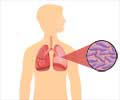
Tuberculosis - Spread - Symptoms - Diagnosis - Treatment - FAQs
Tuberculosis, caused by Mycobacterium tuberculosis, primarily affects the lung. It may spread to other organs.
Tuberculosis, caused by Mycobacterium tuberculosis, primarily affects the lung. It may spread to other organs.
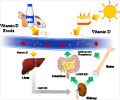
A multicentre randomised controlled trial of adjunctive vitamin D in adults with sputum smear-positive pulmonary tuberculosis was performed in London, UK. Vitamin D occurs in two major forms: D2 and D3. D3 (cholecalciferol) is the form made in the body in response to sun exposure. Doses of 2.5 mg vitamin D3 were given to patients receiving intensive-phase treatment for pulmonary TB. Vitamin D did not significantly affect time to sputum culture conversion in the whole study population. But it was found that sputum culture conversion hastened in people with a particular genotype.
Vitamin D receptors occur in two genetic variants or polymorphisms: TaqI and FokI polymorphisms. People with theTaqI vitamin D receptor polymorphism may further exhibit a particular genetic makeup (genotype) called tt genotype. It was in the participants with tt genotype that the positive effect of vitamin D became evident.

Vitamin Supplements-Vitamin C-Vitamin B6-Vitamin B9 - Vitamin B12
Easy to understand info & tips with diagrams about vitamin supplements like vitamin C, B6, B9 & B12. Latest research news on each vitamin's benefits and drawbacks for better consumer understanding.
Easy to understand info & tips with diagrams about vitamin supplements like vitamin C, B6, B9 & B12. Latest research news on each vitamin's benefits and drawbacks for better consumer understanding.
Primary Source: The Lancet, January 6, 2010
Advertisement
Source-Medindia

India Has the Highest TB Burden, Says Report
A new report released by the Union Ministry of Chemicals and Fertilizers revealed that India has the highest tuberculosis (TB) burden ranking with more than 3.8 million cases in 2008 alone.
A new report released by the Union Ministry of Chemicals and Fertilizers revealed that India has the highest tuberculosis (TB) burden ranking with more than 3.8 million cases in 2008 alone.