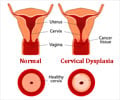
Tissue factor pathway inhibitor-2 (TFPI-2) may play a role in suppressing cervical cancer, according to a recent study.
Cancer of the cervix is the second most common cancer to affect women all over the world. The HPV or Human Papilloma Virus is often implicated as a main cause of the cancer.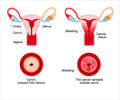
Cervical Cancer - Types, Causes, Symptoms, Diagnosis, Treatment, Complications & Prevention
Cancer cervix refers to cancerous growth in the cervix and usually occurs in the transition called squamo-columnar junction.
Cancer cervix refers to cancerous growth in the cervix and usually occurs in the transition called squamo-columnar junction.
Breakdown of extracellular matrix in the cervix is important for growth and spread of the cancer. It is thought that TFPI-2 inhibits the breakdown of extracellular matrix in the cervix and thus prevents the cancer.
In a recently published paper, some researchers tried to correlate the role of TFPI-2 in the development of cervical cancer. The study was carried out on 128 samples of the cervix obtained by biopsy, out of which 116 samples showed the presence of cancer.

Pap smear and Cervical Cancer Screening
Pap smear is the most common test used in screening cervical cancer caused by an infection with human papilloma virus. Pap smear should be repeated every 1 to 3 years till the age of 65 years.
Pap smear is the most common test used in screening cervical cancer caused by an infection with human papilloma virus. Pap smear should be repeated every 1 to 3 years till the age of 65 years.
The expression of TFPI-2 was also lower in samples positive for HPV infection. Thus, TFPI-2 depletion could influence the progression of cancer in patients with HPV infection.
Advertisement

Screening for Cervical Cancer Risk
According to a recent study, women over the age of 30 who test positive for HPV (Human Papillomavirus) should undergo re-testing two years later as part of cervical cancer screening.
According to a recent study, women over the age of 30 who test positive for HPV (Human Papillomavirus) should undergo re-testing two years later as part of cervical cancer screening.
Downregulation of TFPI-2 was also associated with an increased expression of VEGF. VEGF helps blood vessels to grow and provides nutrition to the cancer cells, thus promoting cancer.
Advertisement

Scientists Find Bitter-blocking Ingredient in Artificial Sweeteners
Researchers have discovered the chemical that specifically blocks people's ability to detect the bitter aftertaste that comes with artificial sweeteners such as saccharin.
Researchers have discovered the chemical that specifically blocks people's ability to detect the bitter aftertaste that comes with artificial sweeteners such as saccharin.
Reference:
1. Zhang Q et al. Reduced expression of Tissue factor pathway inhibitor-2 contributes to apoptosis and angiogenesis in cervical cancer. Journal of Experimental & Clinical Cancer Research 2012, 31:1 doi:10.1186/1756-9966-31-1
Source-Medindia