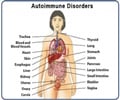
Celiac disease (CD) is a common systemic disorder related to gluten intolerance and is often associated with different autoimmune and neurological diseases.
The study’s lead author Dr. Luis Rodrigo of University Hospital, Central Asturias, Spain and colleagues analyzed the prevalence of serological, genetic, and histological disease markers in 72 multiple sclerosis patients and 126 of their first-degree relatives. Then the results were compared with data from 123 healthy control subjects.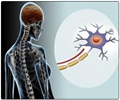
Multiple Sclerosis – Treatment to Reduce Symptoms and Modify course of Disease
Multiple sclerosis is treated with drugs that modify the course of the disease, suppress immunity and relieve symptoms.
Multiple sclerosis is treated with drugs that modify the course of the disease, suppress immunity and relieve symptoms.
The team realized there is little difference in HLA-DQ2 markers between MS patients (29%) and controls (26%) (NS). They found eight MS patients (11.1%) with mild or moderate villous atrophy (Marsh III type) in duodenal biopsies. Results also exhibited celiac disease in 26 of 126 first-degree relatives (32%).
Multiple Sclerosis patients displayed increased frequency of circulating auto-antibodies such as anti-TPO in 19 (26%), ANA in 11 (15%) and AMA in 2 (3%).
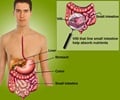
Celiac Disease
Celiac disease is labeled as a digestive disorder associated with malabsorption as well as an abnormal immune reaction to gluten.
Celiac disease is labeled as a digestive disorder associated with malabsorption as well as an abnormal immune reaction to gluten.
He concluded by saying, “The increased prevalence of celiac disease in MS patients and in their first-degree relatives suggests that early detection and dietary treatment of celiac disease in antibody-positive MS patients is advisable”.
Advertisement
http://www.biomedcentral.com/1471-2377/11/31
Advertisement
Quiz on Brain
The human brain is exquisitely intrinsic and is the seat of all emotions. If you are curious about what makes you bad, sad, silly or glad this quiz on the brain will satiate you.
The human brain is exquisitely intrinsic and is the seat of all emotions. If you are curious about what makes you bad, sad, silly or glad this quiz on the brain will satiate you.