Nonalcoholic fatty liver disease includes a number of conditions affecting the liver, ranging from accumulation of fat in the liver to more serious inflammatory changes resulting in steatohepatitis, fibrosis and cirrhosis of the liver.
Nonalcoholic fatty liver disease has been associated with diabetes. A study was conducted in Germany to study the association between increase in liver enzymes and fatty liver, and the presence of pre-diabetes and diabetes.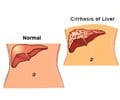
Alcoholic Liver Disease - Causes Symptoms Diagnosis Treatment FAQs
Encyclopedia section of medindia gives general information about Alcoholic Liver Disease.
Encyclopedia section of medindia gives general information about Alcoholic Liver Disease.
A person in the study was said to be pre-diabetic if certain blood glucose tests were abnormal, that is, the person showed impaired glucose tolerance test (IGT) or fasting blood glucose (IFG), or both. Some of the participants had known or newly diagnosed diabetes. Blood glucose levels, HbA1c and C-reactive protein levels were estimated in all participants.
Liver function was estimated by checking for liver enzymes like gamma-glutamyltransferase (GGT), glutamate-pyruvate transaminase (GPT), glutamate-oxalacetate transaminase (GOT) and alkaline phosphatase (AP). The fatty liver index, that is, Bedogni Fatty Liver Index (FLI), was also calculated and a score of greater or equal 60 points was considered as positive for fatty liver disease.

Non-alcoholic Fatty Liver Disease On the Rise in US
The US could soon be faced with an epidemic of Non-Alcoholic Fatty Liver Disease, one of the major contributing factors of chronic liver disease.
The US could soon be faced with an epidemic of Non-Alcoholic Fatty Liver Disease, one of the major contributing factors of chronic liver disease.
Among the participants included in the study, 229 participants reported known diabetes, 106 had newly diagnosed diabetes, 107 had IFG, 309 had IGT, 69 were had both IFG as well as IGT, and 74 could not be classified (due to inconsistent information regarding diabetes status or glucose tolerance test could not be successfully conducted due to various reasons).
Advertisement
Diabetes Type 1, Type 2 - Causes Symptoms Diagnosis and Treatment FAQs
A comprehensive article on diabetes - both Type 1 and Type 2 diabetes, including : causes, signs, symptoms, diagnosis, treatment, facts and a glossary on diabetes.
A comprehensive article on diabetes - both Type 1 and Type 2 diabetes, including : causes, signs, symptoms, diagnosis, treatment, facts and a glossary on diabetes.
The study also inferred some other findings. Briefly, these are:
Advertisement
Fatty Liver May Lead To Type 2 Diabetes Risk
In a new study, scientists have found that individuals with fatty liver were five times more likely to develop Type 2 diabetes than those without fatty liver.
In a new study, scientists have found that individuals with fatty liver were five times more likely to develop Type 2 diabetes than those without fatty liver.
• More males suffered from glucose disturbances
• A number of individuals with less than 10 years education had IGT, newly diagnosed diabetes or known diabetes.
• People suffering from pre-diabetes and diabetes had higher body mass index, waist, hip circumference and high blood pressure.
• Pre-diabetics had a higher value of total cholesterol.
• People with glucose disturbances had higher values of triglycerides, CRP, HbA1c and uric acid.
• People with known diabetes had lower alcohol intake
• Smoking was less common in patients with IFG
• People with known diabetes were physically less active during their leisure time
Patients with pre-diabetes and diabetes had higher incidence of fatty liver, as estimated using the fatty liver index. People taking diabetes medication showed a decreased association between diabetes and fatty liver, indicating a beneficial effect of diabetes medication on fatty liver.
The study thus indicates that increase in liver enzymes and fatty liver is associated not only with diabetes, but also with pre-diabetes, as defined by an impaired fasting glucose or impaired glucose tolerance, or both. These enzymes could thus be used as inexpensive and easily available early indicators of abnormal glucose metabolism.
Reference:
1. Association between Markers of Fatty Liver Disease and Impaired Glucose Regulation in Men and Women from the General Population: The KORA-F4-Study; Ina Maria et al; Plos One 2011.
Source-Medindia