The results of a recent large study suggest that Haemodialysis (HD) and peritoneal dialysis (PD) may offer similar outcomes to patients with end-stage renal disease (ESRD). //
End-stage kidney disease (ESRD) is a condition in which the kidneys completely fail to function. A normally functioning kidney removes wastes and excess water from the body. ESRD usually walks in when chronic kidney disease has reduced the functionality of kidney to less than 10 % of normal. Diabetes and high blood pressure (Hypertension) are two common causes for ESRD. Patients with ESRD often require dialysis. Dialysis is a process where blood is cleansed by passing through a membrane. Thus the cleansing action of kidney is artificially done. There are two types of dialysis: Haemodialysis (HD) and peritoneal dialysis (PD)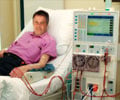
Dialysis - Hemodialysis, Peritoneal Dialysis and Role of Diet and Drugs
Dialysis is an artificial process for removing excess water and waste from the blood. Hemodialysis and peritoneal dialysis are the types of dialysis.
Dialysis is an artificial process for removing excess water and waste from the blood. Hemodialysis and peritoneal dialysis are the types of dialysis.
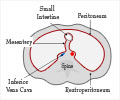
PD is less expensive when compared to HD in some countries as it does not involve hospitalisation or a caregiver and can be done by the patient at home. However there were doubts regarding the risks associated with PD, especially the risk of infection. This doesn’t mean that HD is a relatively safer method. Thus both PD and HD have benefits and risks. While in HD the patient has to be hospitalised for short duration of the day three-four times a week, PD is done daily upto thrice a day.
The study looked at data from three 3-year cohorts (1996 - 1998, 1999 - 2001, and 2002 - 2004) in the US Renal Data System. Earlier studies pointed to higher risks for death in patients treated with PD, but this has been proved wrong. There is no significant difference in the risk for death for HD and PD patients through 5 years of follow-up.
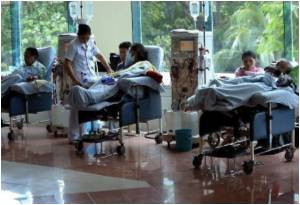
Peritoneal Dialysis Have Higher Risk of Infection and Death
A study published in Canadian Medical Association Journal has found that First Nations people in Canada on peritoneal dialysis are at increased risk of peritonitis and death
A study published in Canadian Medical Association Journal has found that First Nations people in Canada on peritoneal dialysis are at increased risk of peritonitis and death
Source-Medindia
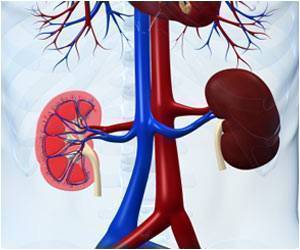
Study Finds Differences in Care for Patients Beginning on Dialysis
Study says kidney disease patients insured by federally sponsored national organizations are more likely to undergo an important predialysis procedure than patients with other insurance
Study says kidney disease patients insured by federally sponsored national organizations are more likely to undergo an important predialysis procedure than patients with other insurance