Formoterol is an effective and safe drug in the treatment of COPD, according to a recent study.
Chronic Obstructive Pulmonary Disease (COPD) is a lung condition wherein the patient suffers from symptoms of breathlessness, cough and reduced exercise capacity. Drugs that dilate the bronchi (the branches of the airways) are used to relieve the obstruction and help the patient to breathe. These drugs may be short-acting like salbutamol, or long-acting like salmeterol and formoterol.
Treatment of Chronic Obstructive Pulmonary Disease or COPD: New Revelations
In patients with moderate-to-very-severe COPD, the drug tiotropium is more effective than salmeterol in preventing exacerbations.
In patients with moderate-to-very-severe COPD, the drug tiotropium is more effective than salmeterol in preventing exacerbations.
The study was carried out on a total of 613 patients of European and Japanese origin. Some patients received 4.5µg of formoterol twice daily, others received a doubled dose of 9µg of formoterol twice daily, and still others received a placebo (an inert substance for comparison purpose). The patients were administered the drug for a total duration of 12 weeks. Lung function was measured using a spirometer. Patients who needed additional medication could take the short-acting drug salbutamol whenever required. They could also continue to take short-acting anticholinergics as earlier.
At the end of the study period, it was found that the measured lung function (which was FEV1 60-min post-dose in the study) improved significantly in both the formoterol groups as compared to placebo. There was no significant difference between the two formoterol groups.

New COPD Guidelines Released
Four organizations released a clinical practice guidelines on the diagnosis and the treatment of chronic pulmonary obstructive disease (COPD).
Four organizations released a clinical practice guidelines on the diagnosis and the treatment of chronic pulmonary obstructive disease (COPD).
Most side effects in patients with formoterol were similar in number as compared to placebo. Side effects included nasopharyngitis (inflammation of the nose and throat), COPD exacerbation, and bronchitis complication. Two deaths occurred in the formoterol groups, but they were unrelated to the treatment.
Advertisement

Formoterol
This medication is a long-acting bronchodilator, prescribed for asthma and Chronic Obstructive Pulmonary Disorder (COPD).
This medication is a long-acting bronchodilator, prescribed for asthma and Chronic Obstructive Pulmonary Disorder (COPD).
Reference:
Advertisement
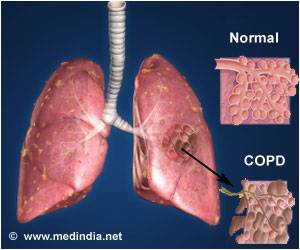
Increased Airway Resistance in COPD Occurs Due to Loss or Narrowing of Small Airways
Increase in airway resistance in COPD occurs due to a loss or narrowing of small airways, which precedes the development of emphysema.
Increase in airway resistance in COPD occurs due to a loss or narrowing of small airways, which precedes the development of emphysema.
Source-Medindia