A new study underlines the importance of testing heart function in patients with chronic obstructive pulmonary disease (COPD), which happens to be one of the most common lung diseases. Chronic obstructive pulmonary disease is a progressive disease that makes it difficult to breathe. This disease can get worse with time and does not have a permanent cure.
Researchers now suggest that modifying heart dysfunction may be of benefit in the treatment of COPD patients. Important parameters of the heart such as the heart rate are controlled by the autonomic nervous system (ANS) of the body.
Treatment of Chronic Obstructive Pulmonary Disease or COPD: New Revelations
In patients with moderate-to-very-severe COPD, the drug tiotropium is more effective than salmeterol in preventing exacerbations.
In patients with moderate-to-very-severe COPD, the drug tiotropium is more effective than salmeterol in preventing exacerbations.
According to the new findings, autonomic nervous system (ANS) dysfunction plays an important role in decreasing the quality of life. Dysfunction of the ANS is known to explain a wide range of physical and physiological illnesses.
A clear cut understanding of the factors contributing to the poor quality of life in patients with lung disease such as COPD can definitely improve their health status. Unfortunately very little research has been done till date.
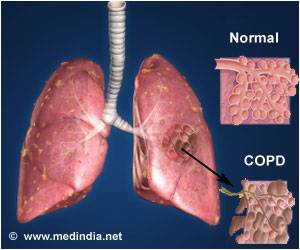
Increased Airway Resistance in COPD Occurs Due to Loss or Narrowing of Small Airways
Increase in airway resistance in COPD occurs due to a loss or narrowing of small airways, which precedes the development of emphysema.
Increase in airway resistance in COPD occurs due to a loss or narrowing of small airways, which precedes the development of emphysema.
Their quality of life was measured through a questionnaire, and their heart rates were measured through Holter electrocardiogram monitoring devices. Lung function was assessed using spirometry, whole-body plethysmography, and diffusion capacity measurements. The Holter electrocardiogram device recorded heart rate variability (HRV), an assessment tool for the functionality of the autonomic nervous system.
Advertisement

COPD Risk High in Young Adults
A new study warns that adults over 35 years of age have a 25 percent risk of suffering from chronic obstructive pulmonary disease (COPD) in their lifetime.
A new study warns that adults over 35 years of age have a 25 percent risk of suffering from chronic obstructive pulmonary disease (COPD) in their lifetime.
Thus it clear that testing the cardiac autonomic function is important for improving the quality of life in patients with Chronic obstructive pulmonary disease (COPD). Treatments that target the autonomic nervous system regulation of the heart can help in overall improvement of patients with chronic lung pathologies like obstructive airway disease.
Advertisement
New Approach to Treat COPD
Addition of a common antibiotic to the usual daily treatment for COPD was found to reduce the occurrence of acute exacerbations by 27%.
Addition of a common antibiotic to the usual daily treatment for COPD was found to reduce the occurrence of acute exacerbations by 27%.
Source-Medindia