Air pollution is on the increase and so are the associated risks.
It is a generally accepted fact that air in urban areas is polluted by mutagenic and carcinogenic substances, such as polycyclic aromatic hydrocarbons (PAHs).
Lung Cancer - Types, Causes, Symptoms, Diagnosis, Treatment and Prevention
Lung cancer is a malignant tumor in the lung tissues. Smoking is the main cause of lung cancer with symptoms like recurrent respiratory diseases.
Lung cancer is a malignant tumor in the lung tissues. Smoking is the main cause of lung cancer with symptoms like recurrent respiratory diseases.
Ubiquitous air pollution, even at low levels, is a cause of public health concern because of the number of people who are exposed to it.
Ultrafine particles, < 100 nm in diameter, have large surface areas and are released in increased numbers
From vehicular traffic. They accumulate in the airways and then translocate to other organs such as the liver, kidneys, heart and brain.

Quiz on Lung Cancer
Lung cancer and smoking are closely associated. Lung cancer risk increases with the intensity of smoking. For more details, take this quiz.
Lung cancer and smoking are closely associated. Lung cancer risk increases with the intensity of smoking. For more details, take this quiz.
Earlier studies have also confirmed that occupational areas with high levels of benzene are known to cause hematological (blood) cancers whereas occupational exposure to diesel engine exhaust may cause cervical, ovarian and stomach cancer.
Advertisement
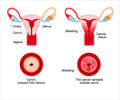
Cervical Cancer - Types, Causes, Symptoms, Diagnosis, Treatment, Complications & Prevention
Cancer cervix refers to cancerous growth in the cervix and usually occurs in the transition called squamo-columnar junction.
Cancer cervix refers to cancerous growth in the cervix and usually occurs in the transition called squamo-columnar junction.
Methods -During 1993–1997, 57,053 men (48%) and women (52%) between the age of 50–64 years, who were living in Copenhagen and Aarhus areas, were recruited for the Diet, Cancer and Health cohort study.
Advertisement

Air Pollution Linked to Premenopausal Breast Cancer in Later Life
Exposure to air pollution early in life and when a woman gives birth to her first child may alter her DNA and may be associated with premenopausal breast cancer later in life
Exposure to air pollution early in life and when a woman gives birth to her first child may alter her DNA and may be associated with premenopausal breast cancer later in life
Follow-ups were calculated for each cohort member until 27 June 2006 based on the information got from the Danish Cancer Registry and the Danish Pathology Data Bank.
The end-points for the risk analyses were primary cancers rather than lung cancer.
The significance of this study was that it included a 10-year prospective follow-up of a relatively large cohort.
Result & Conclusion - The study found significant associations between traffic-related air pollution at the residence for several decades and risks for cervical cancer and brain cancer. The study discovered a border line significantly increased risk for liver cancer associated with traffic pollution within 200 m of the residence.
The study also showed that the risk for kidney cancer increased with increased nitrous oxide concentration near the residence.
However, there was a weak, insignificant association between traffic-related air pollution and breast or bladder cancer risk.
Further studies are required to confirm possible risks for other cancers.
Reference: Air pollution from traffic and cancer incidence: a Danish cohort study; Ole Raaschou et al; Environmental Health 2011.
http://www.ehjournal.net/content/pdf/1476-069X-10-67.pdf
Source-Medindia