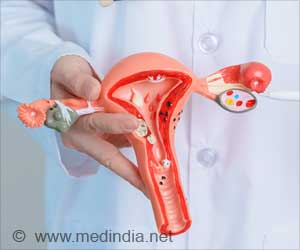
Young women diagnosed with an early stage of ovarian cancer can preserve future fertility by keeping at least one ovary or the uterus without increasing the risk of dying from the disease, according to a new study.
Most cases of ovarian cancer are diagnosed at later stages and in older women.
Ovarian Cancer | Cancer in the Ovaries - Causes, Symptoms, Treatment & Prevention
Ovarian cancer affects both the ovaries and is referred to as the 'silent killer' as the symptoms go unnoticed until the disease advances.
Ovarian cancer affects both the ovaries and is referred to as the 'silent killer' as the symptoms go unnoticed until the disease advances.
Surgery for ovarian cancer usually involves complete removal of the uterus (hysterectomy) and ovaries, which not only results in the loss of fertility, but also subjects young women to the long-term consequences of estrogen deprivation.
Study's lead author Jason Wright, M.D., of Columbia University College of Physicians and Surgeons in New York City carried out a study to examine the safety of fertility-conserving surgery in pre-menopausal women with ovarian cancer. This type of surgery conserves at least one ovary or the uterus.
The researchers analyzed data from women 50 years of age or younger who were diagnosed with early stage (stage I) ovarian cancer between 1988 and 2004 and who were registered in the National Cancer Institute's Surveillance, Epidemiology and End Results database, a population-based cancer registry that includes approximately 26 percent of the US population.
Patients who had both of their ovaries removed were compared with those who had only the cancerous ovary removed. A second analysis examined uterine conservation vs hysterectomy.
Advertisement

Research Highlights Ways to Preserve Fertility Among Cancer Patients
Cancer therapies have improved a whole lot in recent years, but young cancer patients have some issues since chemotherapy and radiation treatments often threaten fertility.
Cancer therapies have improved a whole lot in recent years, but young cancer patients have some issues since chemotherapy and radiation treatments often threaten fertility.
To examine the effect of uterine preservation, the researchers studied a total of 2,911 women. While most of the women underwent hysterectomy, about one in four (23 percent) had uterine preservation. Uterine preservation also had no effect on survival.
Advertisement

Survivors of Rare Ovarian Cancer may Retain Menstrual Function and Reproductive Ability
A new prospective study suggests that ovarian germ cell tumour patients treated with platinum-based chemotherapy and fertility-sparing surgery may retain their menstrual function
A new prospective study suggests that ovarian germ cell tumour patients treated with platinum-based chemotherapy and fertility-sparing surgery may retain their menstrual function
"Given the potential reproductive and non-reproductive benefits of ovarian and uterine preservation, the benefits of conservative surgical management should be considered in young women with ovarian cancer," the authors said.
The study is published in the September 15, 2009 issue of Cancer, a peer-reviewed journal of the American Cancer Society.
Source-ANI
LIN