Breast and cervical cancers are likely to kill millions of women in developing countries in the coming years, thriving on ignorance of the disease and a lack of means to diagnose and treat it, experts said on Tuesday.
Worldwide, incidence of all types of cancer will double over the next two decades, with roughly 26.4 million new cases and 17 million deaths annually by 2030, a coalition of cancer specialists warned at a congress in Berlin.
Breast Cancer - Causes, Risks, Symptoms, Diagnosis, Staging, Treatment, Prevention & Prognosis
Breast cancer is a cancer that affects the breasts or mammary glands. Early detection and lifestyle changes help in controlling breast cancer.
Breast cancer is a cancer that affects the breasts or mammary glands. Early detection and lifestyle changes help in controlling breast cancer.
"Once considered a disease of wealthy, industrialised societies, cancer is now increasingly a health burden for less-developed regions of the world.
"More than half of the 12.4 million estimated new cases of cancer in 2008, and two-thirds of the estimated 7.6 million cancer deaths, occurred in low- and middle-income countries, where cancer kills more people each year than AIDS, TB and malaria."

About Cancer in Women
Cancer is one of the frequently talked about and most feared disease that falls under the genre of lifestyle diseases that have evolved, rather rapidly, in the past two decades.
Cancer is one of the frequently talked about and most feared disease that falls under the genre of lifestyle diseases that have evolved, rather rapidly, in the past two decades.
The risk is being borne especially by women in resource-poor settings.
Advertisement
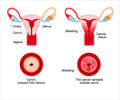
Cervical Cancer - Types, Causes, Symptoms, Diagnosis, Treatment, Complications & Prevention
Cancer cervix refers to cancerous growth in the cervix and usually occurs in the transition called squamo-columnar junction.
Cancer cervix refers to cancerous growth in the cervix and usually occurs in the transition called squamo-columnar junction.
But in developing countries, the disease "remains a low priority" for spending, which is reflected in the death toll, the paper said.
Advertisement

Cancer Pain - Causes - Effects - Assessment - Treatment - FAQs - Video
Every 1 out of 3 people undergoing cancer treatment experiences pain.
Every 1 out of 3 people undergoing cancer treatment experiences pain.
Cases of breast cancer in these countries is also growing at up to 10 times the global average, up to five percent per year.
The study says the rise in cancers can be explained mainly by changing lifestyles and exposure to microbes.
Shifting diets and obesity are linked to colon cancer, while infection by the hepatitis B virus, the human papillomavirus (HPV) and Helicobacter pylori bacterium can cause liver cancer, cervical cancer and stomach cancer respectively.
But the experts also pointed the finger at a lack of means to spot and treat cancer effectively, and the role of myths, prejudice and stigma in discouraging victims from getting timely medical help.
"Women with breast cancer in Ethiopia cite mystical forces, including the 'evil eye,' as possible causes of their illness," they said.
"And in Ukraine, women have reported that they were not told they had breast cancer, even when undergoing a mastectomy, because cultural taboos and official polilcy encourage doctors not to reveal a diagnosis of cancer to patients, to spare the sick patient from distress."
In India, between 50 and 70 percent of the 75,000 cases of breast cancer diagnosed each year are spotted only an advanced stage. In Europe, only 38 percent of diagnosed cases fall into this category, and the figure in the United States is just 30 percent.
"Developing countries need simple diagnostic tools which can be used for poor people in a rural setting," one of the authors, Joseph Saba, told AFP.
The paper was authored by a consortium called the Cancer Treatment Informal Working Group (CanTreat International).
It was presented at a congress of the European Cancer Organisation (ECCO) and the European Society for Medical Oncology (ECMO).
Source-AFP
SRM