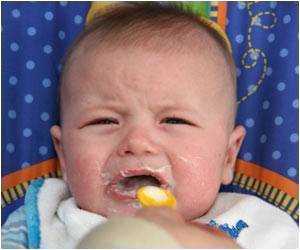
Having the television on constantly in a household with infants and toddlers is bad for brain and language development because it reduces the number of words the kids hear and say, a study showed Monday.
"Audible television clearly reduces speech for both infants and their caregivers within the home and this is potentially harmful for babies' development," said University of Washington professor of pediatrics Dimitri Christakis, who led the study.
Asperger´s Syndrome - Symptoms - Evaluation - Treatment - Prognosis - FAQs
Asperger’s Syndrome or (AS) is a neurological condition marked by delay in the development of motor skills, difficulty in social interactions, strange facial expressions, misplaced gestures and fixed routines. .
Asperger’s Syndrome or (AS) is a neurological condition marked by delay in the development of motor skills, difficulty in social interactions, strange facial expressions, misplaced gestures and fixed routines. .
"Adults typically utter approximately 941 words per hour. Our study found that adult words are almost completely eliminated when television is audible to the child," said Christakis.
"These results may explain the association between infant television exposure and delayed language development," Christakis said.

Baby's Language Development Hindered by Baby Videos and DVDs
: Instead of enhancing an infants learning capability it seems the baby video and DVDs are actually hindering the learning process.
: Instead of enhancing an infants learning capability it seems the baby video and DVDs are actually hindering the learning process.
For the study, 329 children ranging in age from two months to four years wore special vests with a chest pocket that held a small digital recorder.
Advertisement

Speech and Language Disorders in children
Distance education for School Problems and the Family Physician
Distance education for School Problems and the Family Physician
When the researchers counted the number of words uttered by adults and vocalizations by children, as well as vocal interactions between grown-ups and kids, they found that having the telly on resulted in significant reductions in all speech, regardless of whether it was being actively watched or just on in the background.
Advertisement

Too Much Television During Holidays Bad for Kids
Kids are glued to the television sets during holidays and this is fraught with health risks, says a new study.
Kids are glued to the television sets during holidays and this is fraught with health risks, says a new study.
"Television is not only a poor caregiver substitute, but it actually reduces the number of language sounds and words babies hear, vocalize and therefore learn," he said.
"We are increasingly technologizing infancy, which may prove harmful to the next generation of adults."
The study was published in the June issue of the Archives of Pediatrics and Adolescent Medicine.
Source-AFP
LIN