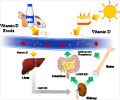
Most Americans and others are not taking enough vitamin D, a fact that may put them at significant risk for developing cancer, according to a landmark study conducted by Creighton University School of Medicine.
The four-year, randomized study followed 1,179 healthy, postmenopausal women from rural eastern Nebraska.* Participants taking calcium, as well as a quantity of vitamin D3 nearly three times the U.S. government’s Recommended Daily Amount (RDA) for middle-age adults, showed a dramatic 60 percent or greater reduction in cancer risk than women who did not get the vitamin.The results of the study, conducted between 2000 and 2005, were reported in the June 8 online edition of the American Journal of Clinical Nutrition.
“The findings are very exciting. They confirm what a number of vitamin D proponents have suspected for some time but that, until now, have not been substantiated through clinical trial,” said principal investigator Joan Lappe, Ph.D., R.N., Creighton professor of medicine and holder of the Criss/Beirne Endowed Chair in the School of Nursing. “Vitamin D is a critical tool in fighting cancer as well as many other diseases.”
Research participants were all 55 years and older and free of known cancers for at least 10 years prior to entering the Creighton study. Subjects were randomly assigned to take daily dosages of 1,400-1,500 mg supplemental calcium, 1,400-1,500 mg supplemental calcium plus 1,100 IU of vitamin D3, or placebos. National Institutes of Health funded the study.
Over the course of four years, women in the calcium/vitamin D3 group experienced a 60 percent decrease in their cancer risk than the group taking placebos. On the premise that some women entered the study with undiagnosed cancers, researchers then eliminated the first-year results and looked at the last three years of the study. When they did that, the results became even more dramatic with the calcium/vitamin D3 group showing a startling 77 percent cancer-risk reduction.
In the three-year analysis, there was no statistically significant difference in cancer incidence between participants taking placebos and those taking just calcium supplements. Through the course of the study, 50 participants developed nonskin cancers, including breast, colon, lung and other cancers.
Advertisement
There is a growing body of evidence that a higher intake of vitamin D may be helpful in the prevention and treatment of cancer, high blood pressure, fibromyalgia, diabetes mellitus, multiple sclerosis, and rheumatoid arthritis and other diseases. Humans make their own vitamin D3 when they are exposed to sunlight. In fact, only 10-15 minutes a day in a bright summer sun creates large amounts of the vitamin, Lappe said. However, people need to exercise caution since the sun’s ultraviolet B rays also can cause skin cancer; sunscreen blocks most vitamin D production.
Advertisement
Experts generally agree that the RDA** for vitamin D needs to be increased substantially, however there is debate about the amount. Supplements are available in two forms – vitamin D2 and vitamin D3. Creighton researchers recommend vitamin D3 , because it is more active and thus more effective in humans.
Source-Newswise
MED