Obesity - Causes, Symptoms, Diagnosis, Complications, Treatment
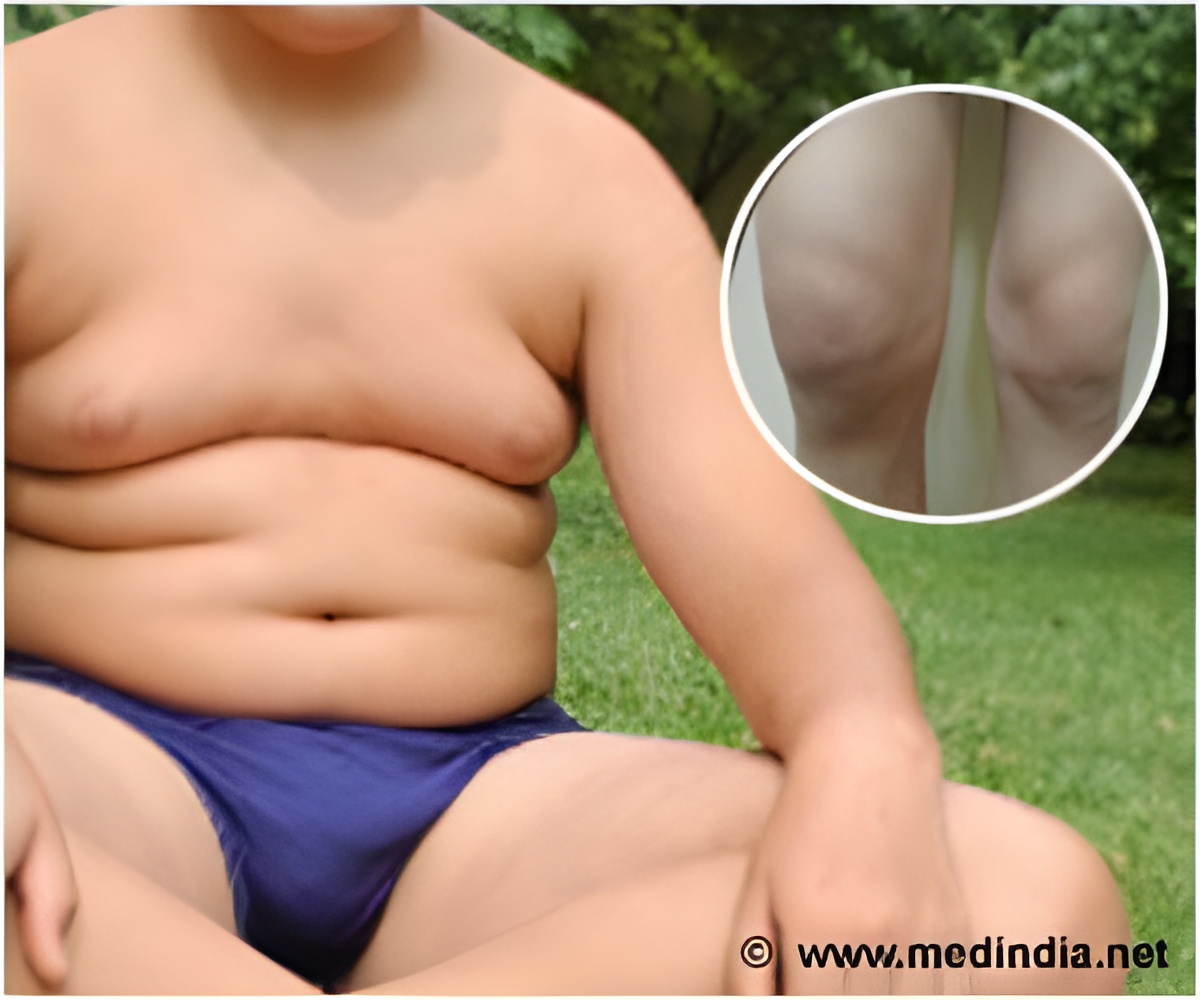
Obesity is a condition where there is excess accumulation of body fat which poses a risk to the health of the individual. It can affect children and adults.
Obesity is a condition where there is excess accumulation of body fat which poses a risk to the health of the individual. It can affect children and adults.
Obesity, a major public health problem in the United States and increasingly in much of the Western world, results, in part, from an increase in the mass and number of white fat cells. Because white fat cells are post-mitotic, meaning that they cannot divide, scientists have hypothesized that a population of fat precursor cells must exist in the fat depot in order to produce new fat cells. But identifying these fat precursor cells has been difficult.
With the assistance of researchers in Rockefeller's Flow Cytometry Resource Center, first author Matt Rodeheffer, a postdoctoral associate in Friedman's Laboratory of Molecular Genetics, used a cell sorting technique called fluorescence-activated cell sorting, or FACS, to search for cell populations that could produce fat in cell cultures and identified two such populations.
To determine if these cells could develop into fat cells in living animals, Rodeheffer injected these cell populations into the fat depots of a genetically engineered mouse, developed at NIH, called fatless, which lacks white fat and mimics a condition in humans called lipodystrophy that also results in diabetes.
Rodeheffer found that only one of the isolated cell populations, which express the CD24 cell-surface marker protein, produced fat tissue in the fatless mouse. This population normally represents only .08 percent of the non-adipocyte population in adipose tissue.
Advertisement
"I injected the CD24+ cells - which represent a very small population of cells in normal adipose tissue - into a site where the fat would normally develop in the fatless mouse, and I found that a normal sized fat depot forms at the site of injection," says Rodeheffer.
Advertisement
"This finding gives us a better understanding of the basic biology of adipose tissue and opens the door for us and for other researchers to be able to study these cells in living animals and determine the molecular factors that regulate formation of adipose tissue," says Rodeheffer. "We then can potentially study how the growth and differentiation of these cells are regulated in obesity and determine whether or not the molecular events that are involved in the regulation of adipose tissue are contributing factors to other pathologies, such as diabetes and cardiovascular disease, that are associated with obesity and metabolic syndrome."
Source-Medindia
GPL/M