In what is some astonishing data, it has emerged that patients who die in the hospital in the United States are almost five times as likely to have spent part of their last hospital stay in the ICU than patients in England.
What's more, over the age of 85, ICU usage among terminal patients is eight times higher in the U.S. than in England, according to new research from Columbia University that compared the two countries' use of intensive care services during final hospitalizations.
Accident and Trauma Care - Golden Hour - Taking Care - Don’t
Accident and trauma care is an important public health challenge that requires immediate attention. Injury (trauma) is the leading cause of death for all age groups under the age of 44.
Accident and trauma care is an important public health challenge that requires immediate attention. Injury (trauma) is the leading cause of death for all age groups under the age of 44.
Their findings were published in the November 1 issue of the American Journal of Respiratory and Critical Care Medicine, published by the American Thoracic Society.
Dr. Wunsch and colleagues wanted to examine the differences in ICU usage in England and the U.S., because the countries' similar life expectancies and population demographics enabled a comparison of fundamentally different healthcare systems.
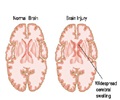
Head Injury | Brain Injury Overview Types Causes Symptoms Diagnosis Treatment
Head injury or traumatic brain injury is a leading cause of disability among children and young adults that leads to varying degrees of physical and mental stability. Fortunately, it is also one of the preventable brain disorder.
Head injury or traumatic brain injury is a leading cause of disability among children and young adults that leads to varying degrees of physical and mental stability. Fortunately, it is also one of the preventable brain disorder.
"In England, there is universal health care through the National Health Service, and there is also much lower per-capita expenditure on intensive care services when compared to the U.S.," said Dr. Wunsch. "The use of intensive care in England is limited by supply to a greater degree than it is in the U.S., and there are consequently implicit and explicit decisions regarding who gets those limited services. We wished to examine what different decisions are made."
Advertisement

Fibromyalgia - Causes, Symptoms, Diagnosis, Treatment & Support Groups
Fibromyalgia (FM) is a chronic health condition charecterized by widespread pain and stiffness in the muscles, joints and tendons. It is considered to be a co-morbid disorder.
Fibromyalgia (FM) is a chronic health condition charecterized by widespread pain and stiffness in the muscles, joints and tendons. It is considered to be a co-morbid disorder.
They also found that hospital mortality among those who received intensive care was almost three times higher in England than in the U.S. (19.6 percent vs. 7.4 percent). But when examining deaths overall, only 10.6 of hospital deaths in England involved the ICU, whereas 47.1 in the U.S. did. Of those over 85, only 1.3 percent received ICU care in England vs. 11 percent in the U.S. But young adults and children received ICU services at similar rates in both countries. "These numbers need to be interpreted with caution," explains Dr. Wunsch, "as the differences in mortality for ICU patients likely reflect the higher severity of illness of patients admitted in the first place in England. The data do bring up the interesting question of how much intensive care is beneficial. Doing more may not always be better."
Advertisement

Infantile Cortical Hyperostosis - Introduction
Infantile Cortical Hyperostosis is a disease of unknown cause, where bizarre thickening of the cortical bones of infants is the prime finding
Infantile Cortical Hyperostosis is a disease of unknown cause, where bizarre thickening of the cortical bones of infants is the prime finding
"Whether less intensive care for very elderly patients who are dying is a form of rationing, or is actually better recognition of what constitutes appropriate care at the end of life warrants further research," said Dr. Wunsch. "These findings highlight the urgent need to understand whether there is over-use of intensive care in the U.S., or under-use in England."
Furthermore, future research must further investigate not just the origins, but the implications of these differences. "Faced with a provocative finding of cross-national difference, the scientific community faces a choice between at least two paths," wrote Theodore Iwashyna, M.D., Ph.D., and Julia Lynch, Ph.D., in an editorial in the same issue of the journal. "One path leads to carefully unpacking the origins of this difference and teaching us something generally true about how critical care systems develop. The other path leads into the hospitals, using observational data to imagine new ways to organize care and generate the equipoise necessary for careful interventional studies of such interventions. The first path helps us shape national policy levers. The latter path helps us redesign care organizations to bring change to patients. Both are necessary."
Source-Eurekalert
RAS