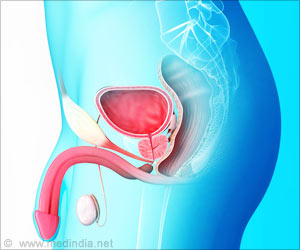
A recent review of studies from the Netherlands finds no evidence that treating varicoceles, a somewhat common condition in men with fertility problems, improves a couple’s chances of conceiving a baby.
However, a U.S. commentator questions the review’s study selection and the way it defines infertility.
Infertility - Causes - Diagnosis - Treatment - FAQs
Infertility is a condition wherein couples fail to achieve pregnancy or if the woman has been unable to carry a pregnancy that results in a live birth.
Infertility is a condition wherein couples fail to achieve pregnancy or if the woman has been unable to carry a pregnancy that results in a live birth.
Surgery or embolization, a procedure that blocks blood supply to the varicoceles, is often performed in an effort to increase fertility.
“Every year thousands of men are operated on without sufficient scientific evidence that the surgery will have any impact,” said Johannes Evers, the lead review author. “There have been dozens of observational studies published showing a positive effect. However, high-quality, randomized trials were not able to confirm these positive conclusions.”

About Male Infertility
Encyclopedia section of medindia briefs you about the Genetics of Male Infertility
Encyclopedia section of medindia briefs you about the Genetics of Male Infertility
“This review fails to offer evidence that treatment of varicoceles in men from couples with otherwise unexplained subfertility improves the couple’s chances of pregnancy,” Evers said. “Treatment of varicoceles in men cannot be recommended. The ‘first, do no harm’ principal should guide us as long as there is no evidence to the contrary.”
Advertisement

Acute Scrotal Pain and Swelling
A case presentation of acute scrotal pain and swelling. A 14 year old boy, came home after a game of basketball and felt a sharp pain in the right side of his scrotum.
A case presentation of acute scrotal pain and swelling. A 14 year old boy, came home after a game of basketball and felt a sharp pain in the right side of his scrotum.
The review appears in the latest issue of the Cochrane Library is a publication of The Cochrane Collaboration, an international organization that evaluates medical research. Systematic reviews draw evidence-based conclusions about medical practice after considering both the content and quality of existing medical trials on a topic.
Advertisement

Study Sheds New Light on Male Infertility
Researchers at NewYork-Presbyterian Hospital/Weill Cornell Medical Center have shed new light on male infertility through two studies.
Researchers at NewYork-Presbyterian Hospital/Weill Cornell Medical Center have shed new light on male infertility through two studies.
Joel Marmar, M.D., a professor of urology at the Robert Wood Johnson Medical School in Camden, New Jersey is concerned that what he calls a “clinical hodgepodge of therapy” makes the results of the review confusing.
“Not everyone with a varicocele is going to be infertile,” Marmar said. “Treatment guidelines written by the American Urological Association and The American Society of Reproductive Medicine suggest that only those with a varicocele that the physician could feel (palpable) and a documented sperm abnormality should be treated. This review had studies that included men with normal semen parameters and very small or subclinical varicoceles.”
Using the more stringent guideline criteria for infertility makes a difference, Marmar said.
“Looking at all eight [review] studies, the odds ratio that treatment would be successful was 1.1 [indicating no benefit from the treatment],” he said. However, the results changed when the reviewers looked at a subset of three studies that met guideline criteria, Marmar said. “When including only those men who had palpable varicoceles and semen abnormalities, the odds ratio doubled. These improved results were reported despite a variety of therapies being used.”
Including both surgery and embolization in the analysis further confused the outcomes as they related to treatment of fertility issues, according to Marmar: “These techniques may have different success and failure rates. When developing a study design, it may not be appropriate to mix treatment options together.”
Source-Newswise
SRM