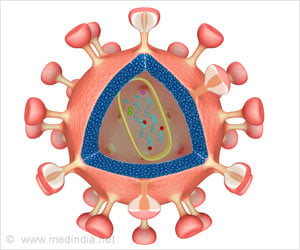
The latest findings by the Scientists at the Gladstone Institute of Virology and Immunology (GIVI) and the University of California, San Francisco (UCSF) say that reactivation of thymus by certain therapies help in the stimulated production of T-cells, a vital immune cells.
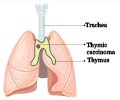
The thymus gland, which produces T-cells, gradually becomes mostly inactive during adulthood, a process called involution. This makes it difficult for HIV-infected adults to make new T-cells.The researchers believe that therapies that stimulate the thymus to produce new T-cells may be helpful in restoring the embattled immune system to HIV-infected patients.
For a long time now, scientists have believed that the thymus cannot be reactivated in humans. However, the new study shows that the thymus can be stimulated to produce more T-cells.
Writing about their findings in the Journal of Clinical Investigation, the research team claimed that they were the first to show that pharmacologic therapies could be used to enhance human thymic function.
“These results represent new proof-of-principle findings that thymic involution can be reversed in humans” said Dr. Laura Napolitano, lead author of the study, an Assistant Investigator at Gladstone and Assistant Professor of Medicine at UCSF.
“Improved T-cell production may be helpful for some medical conditions such as HIV disease or bone marrow transplantation. These findings contribute new information to our understanding of T-cell production and are also an important step to determine whether immune therapies might someday benefit patients who need more T-cells,” she added.
Advertisement
The researchers studied 22 HIV-infected adults for 2 years. Half of the participants were randomly assigned to continue their usual HIV therapy and to receive GH in the first year (“GH Arm”), while the remaining continued their usual HIV therapy without GH treatment (“Control Arm”).
Advertisement
The gains continued to increase at least three months beyond GH discontinuation, and appeared to persist for at least one year after GH discontinuation.
“The findings of this study are exciting, and dispel the previously-held notion that the thymus cannot be summoned into action later in life. If these findings bear out in larger studies, this news should be of particular interest to those in need of new T-cells, for instance, adults with HIV disease or other forms of T cell depletion,” said senior author Joseph M. McCune, a Professor of Medicine at UCSF
The researchers, however, cautioned: “GH should not be used as a treatment for immune purposes in HIV disease or in any other individuals at this time, unless this treatment occurs within a research study. More research is needed to learn whether stimulating the production of new T-cells actually provides a health benefit.
Though the sample in this study is relatively small, a larger, multi-center study conducted by the AIDS Clinical Trial Group (ACTG) has yielded similar results in preliminary analyses.
Source-ANI
SUN/M