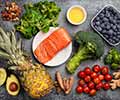
A recent report recommends the all-good Mediterranean diet, an eating regimen which is rich in vegetables, fruits, nuts, whole grains and fish, as people who adopt such eating habits are less likely to be depressed, says a new report.
The finding has been published in the October issue of Archives of General Psychiatry, one of the JAMA/Archives journals.
Mediterranean Diet - Benefits - Components - Olive Oil - FAQs
Mediterranean diet has long been considered one of the healthiest diets on the planet. This diet plan discourages the use of saturated fats and hydrogenated oils while cooking meals.
Mediterranean diet has long been considered one of the healthiest diets on the planet. This diet plan discourages the use of saturated fats and hydrogenated oils while cooking meals.
Participants reported their dietary intake on a food frequency questionnaire, and the researchers calculated their adherence to the Mediterranean diet based on nine components (high ratio of monounsaturated fatty acids to saturated fatty acids; moderate intake of alcohol and dairy products; low intake of meat; and high intake of legumes, fruit and nuts, cereals, vegetables and fish).
After a median (midpoint) of 4.4 years of follow-up, 480 new cases of depression were identified, including 156 in men and 324 in women. Individuals who followed the Mediterranean diet most closely had a greater than 30 percent reduction in the risk of depression than whose who had the lowest Mediterranean diet scores.

Novel Pill Provides Natural Heart-Protecting Properties Found In Mediterranean Diet
Scientists in Britain have developed a novel pill that would provide natural heart-protecting benefits of a Mediterranean diet.
Scientists in Britain have developed a novel pill that would provide natural heart-protecting benefits of a Mediterranean diet.
"The specific mechanisms by which a better adherence to the Mediterranean dietary pattern could help to prevent the occurrence of depression are not well known," the authors write.
Advertisement

Mediterranean Diet, Exercise Combo Reduces Alzheimer's Risk
Combining exercise and the Mediterranean-type diet can cut the chances of developing Alzheimer's by as much as 60 per cent, a new study shows.
Combining exercise and the Mediterranean-type diet can cut the chances of developing Alzheimer's by as much as 60 per cent, a new study shows.
"However, the role of the overall dietary pattern may be more important than the effect of single components. It is plausible that the synergistic combination of a sufficient provision of omega-three fatty acids together with other natural unsaturated fatty acids and antioxidants from olive oil and nuts, flavonoids and other phytochemicals from fruit and other plant foods and large amounts of natural folates and other B vitamins in the overall Mediterranean dietary pattern may exert a fair degree of protection against depression," the authors write.
Advertisement

Longevity Linked To Specific Foods In Mediterranean Diet
New study claims that only some part of Mediterranean diet are more important than others in promoting good health.
New study claims that only some part of Mediterranean diet are more important than others in promoting good health.
TAN