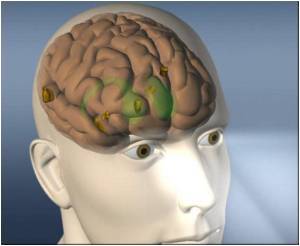

The Brain behind Facial Recognition
Suppose, you are on a stroll and you bump into a grey-haired man, you just cant miss, and instantly, you exclaim “hello, Mr. Clinton…”, but have you considered the brain behind the ability
Suppose, you are on a stroll and you bump into a grey-haired man, you just cant miss, and instantly, you exclaim “hello, Mr. Clinton…”, but have you considered the brain behind the ability
"However in humans, as well as in macaque monkeys, this principle only works with individuals of the same kind," Dahl said.
Even though the recognition of conspecific faces is achieved by means of holistic processing, the separate parts such as mouth, nose and eyes as well as the facial proportions are still important.

Face Recognition Different in Asians and Caucasians
In a study on Caucasians and Asians, the researchers found that people of different races recognise faces differently.
In a study on Caucasians and Asians, the researchers found that people of different races recognise faces differently.
With the help of the "Thatcher illusion" the scientists examined the facial recognition of macaque monkeys and humans.
Advertisement

A Cat can Beat a Supercomputer in Face Recognition
A cat is capable of recognizing faces faster than a supercomputer.
A cat is capable of recognizing faces faster than a supercomputer.
Christian Wallraven, another member of the research team, said: "The faces in which the eyes and the mouth were rotated 180 degrees look grotesque - but only if we see them the right side up. Upside-down the differences between a normal face and a 'thacherized' face are hardly recognizable."
Advertisement
The holistic processing mechanisms allow us to recognize fine changes in the arrangement of the separate facial parts. If the whole face is rotated 180 degrees, this ability gets lost.
The usual recognition mechanisms do not function with either inverted faces or with the faces of foreign species.
The scientists discovered that the Thatcher illusion in macaque monkeys only works for the faces of their conspecifics, while they paid no special attention to the extremely grotesque human faces. Vice versa it behaved the same with humans for whom the manipulated monkey faces remained inconspicuous.
"It must have been of great advantage for us as well as for our next relatives, the monkeys, in the course of the evolution to recognize especially the faces of our kind and also to develop similar processing mechanisms," Wallraven said.
Source-ANI