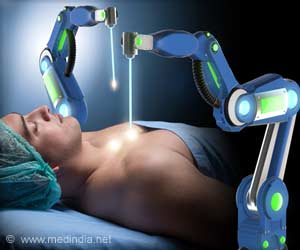
Establishing audio-video contacts between doctors and patients through the internet may have an immediate and profound impact on the treatment of stroke patients throughout the world, say researchers.
Dr. Brett C. Meyer, Co- Director of the UC San Diego Medical Center Stroke Center, describes this approach as telemedicine.
Cholesterol - Lipoproteins - Functions - Normal Blood Cholesterol Levels - Causes - Treatment - FAQs
Cholesterol is produced by the body (liver) and is essential for normal body functioning.
Cholesterol is produced by the body (liver) and is essential for normal body functioning.
The researchers say that their main objective was to determine whether such an approach could allow doctors to make good treatment decisions, and better decisions than telephone consultations, when evaluating stroke patients across distant sites.
The results of the STRokE DOC trial, based on 222 patients cases, showed that telemedicine evaluation actually led to better decision-making than telephone consultations in the care of those patients.

Heat Stroke - Causes - Symptoms - Treatment - FAQs
Heat stroke is caused when body temperature or hyperthermia exceeds 40.6°C or 105.1°F. Heat stroke can be triggered due to overwork during summer months and lack of perspiration.
Heat stroke is caused when body temperature or hyperthermia exceeds 40.6°C or 105.1°F. Heat stroke can be triggered due to overwork during summer months and lack of perspiration.
The article adds that the audio/video teleconsultation system allows the stroke expert real-time visual and audio access to the patient, medical team and medical data at the remote site.
Advertisement
High Blood Pressure
High blood pressure or hypertension is defined as a blood pressure of above 140 mm Hg (systolic) and or 90mm Hg (diastolic).
High blood pressure or hypertension is defined as a blood pressure of above 140 mm Hg (systolic) and or 90mm Hg (diastolic).
UC San Diego stroke team doctors can access the telemedicine system from any location with an Internet connection, enabling them to rapidly connect with an emergency medicine practitioner, the patient and perhaps their family members at the "spoke".
Advertisement
Patients and their families can see, hear, and communicate directly with the stroke expert.
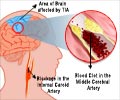
"When a person suffers a stroke, time is of the essence," Meyer said, adding that waiting too long to give the drug can result in bleeding in the brain, or even death.
"If you make a poor decision using a telephone consultation, you potentially put the patient at risk for a poor outcome. The question we set out to ask with this five-year study was, 'did we make the right decision?' The answer was overwhelmingly, yes," Meyer added.
He believes that the proof that telemedicine results in better treatment decisions than telephone consultations may lead to some immediate changes in how stroke patients in remote areas are evaluated and treated.
"Rural physicians can now provide much needed specialty care to their patients via telemedicine. This is welcome news for rural healthcare providers in the U.S.," said Dr. George Rodriguez of El Centro Regional Medical Center in California, a rural community partner with UC San Diego in its STRokE DOC program and a participating spoke hospital in the clinical trial.
The UC San Diego researchers say that the next step is a study to evaluate the long-term health outcomes of patients.
"What this study tells us is that we need a bigger trial to determine the difference - if any - in clinical outcomes for these patients," they say.
The reliability of telemedicine had already been established, as reported in the journal Neurology in 2005, where the UC San Diego team studied Internet-based remote video evaluations of acute stroke patients.
Source-ANI
SPH