About Mosquito Diseases
Mosquito-borne diseases, like malaria, filaria, dengue, etc are common in places conducive of mosquito breeding. Swamps, ponds and stagnated drainage provide optimal breeding ground for mosquitoes.
Mosquito-borne diseases, like malaria, filaria, dengue, etc are common in places conducive of mosquito breeding. Swamps, ponds and stagnated drainage provide optimal breeding ground for mosquitoes.
The new study appears in the June 21 issue of the Proceedings of the National Academy of Sciences. Former CU-Boulder researcher Elizabeth Costello, now at Stanford University, was co-lead author on the study. Co-authors included CU-Boulder Assistant Professor Noah Fierer, CU-Boulder Assistant Professor Rob Knight, Monica Contreras of the Venezuelan Institute for Scientific Research and Magda Magris of the Amazonic Center for Research and Control of Tropical Diseases in Venezuela.
Dominguez-Bello said the bacterial communities of C-section babies were dominated by species from the Staphylococcus genus, most of which are harmless but a few of which can cause severe infections. "These differences we are seeing in this study might be related with increased health risks in C-section babies, although more research is needed," she said.

About Bacterial Vaginosis
Bacterial vaginosis (BV) is a disorder characterized by an offensive vaginal discharge & it is most common among women of childbearing age.
Bacterial vaginosis (BV) is a disorder characterized by an offensive vaginal discharge & it is most common among women of childbearing age.
In a 2004 study undertaken in Chicago and Los Angeles County hospitals, between 64 percent and 82 percent of reported cases of MRSA skin infections in newborns occurred in C-section infants. While the World Health Organization has recommended the percentage of births via C-section not exceed 15 percent in any country because of potential medical complications, the rate is much higher in a number of countries, including China at nearly 50 percent and the United States at about 30 percent.
Advertisement

Boils | Skin Abscess - Causes, Symptoms, Diagnosis, Treatment
Encyclopedia section of medindia gives general info about Boils / Skin Abscess
Encyclopedia section of medindia gives general info about Boils / Skin Abscess
In a related 2009 study led by Knight, researchers developed the first atlas of microbial diversity across the human body in adults, charting wide variations in microbe populations from the forehead and feet to noses and navels of individuals -- differences that were not yet apparent in the PNAS newborn study. One goal of the human bacterial studies is to find out what is normal for healthy people, which should provide a baseline for studies looking at human disease states, said Knight.
Advertisement
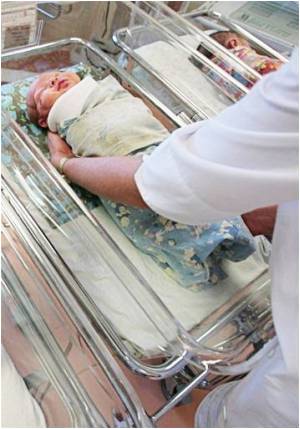
"In a sense, the skin of newborn infants is like freshly tilled soil that is awaiting seeds for planting -- in this case bacterial communities," said Fierer of CU-Boulder's ecology and evolutionary biology department. "The microbial communities that cluster on newborns essentially act as their first inoculation."
Fierer, also a fellow at CU's Cooperative Institute for Research in Environmental Sciences, said that during vaginal births "it appears that the newborns pick up the bacteria from the mothers on the way out. But in C-sections, the bacterial communities of infants could come from the first person to handle the baby, perhaps the father."
The new study has allowed the researchers "to capture the first moments in time" of infant bacterial communities, said Costello, a former CU-Boulder postdoctoral researcher. "The challenge now is to fill in the rest of the story by tracking microbial communities in infants to toddlers to children and adults over weeks, months and years to see how they evolve and change," she said.
The PNAS study included nine women from 21 to 33 years old and 10 newborns and was undertaken at the Puerto Ayacucho Hospital in Amazonas State, Venezuela. The babies were sampled within 24 hours of birth by swabbing their mouths and skin and by taking samples from their upper throats and gastrointestinal tracts, said Costello. The research team then used a powerful gene sequencing technique to simultaneously analyze all of the bacteria.
The effort involved isolating and amplifying tiny bits of microbial DNA, then building complementary DNA strands with a high-powered sequencing machine that allowed the team to pool hundreds of samples together in single sequencing runs to identify different families and genera of bacteria, said Knight.
"While the cost of gene sequencing is dropping rapidly, new techniques are allowing us to speed up the process at the same time," said Knight. "We can now foresee a time when such genetic sequencing could be used in relatively small biomedical laboratories in developing countries."
The new PNAS study was supported by the Venezuelan Institute for Scientific Research,
Source-Eurekalert