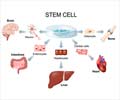
In a clinical trial, scientists from Northwestern University's Feinberg School of Medicine have showed that stem cell transplantation could reverse the neurological dysfunction of early-stage multiple sclerosis patients. For the study, the researchers transplanted the patients'' own immune stem cells into their bodies and thereby "resetting" their immune systems.
"This is the first time we have turned the tide on this disease," Lancet quoted principal investigator Richard Burt, M.D. chief of immunotherapy for autoimmune diseases at the Feinberg School, as saying.
Multiple sclerosis - Symptoms - Causes - Diagnosis - Treatment
Multiple sclerosis can be a severely disabling autoimmune disease that affects the myelin or insulating layer of the nerve fibers and typically has remissions and relapses
Multiple sclerosis can be a severely disabling autoimmune disease that affects the myelin or insulating layer of the nerve fibers and typically has remissions and relapses
They experienced improvements in areas in which they had been affected by multiple sclerosis including walking, ataxia, limb strength, vision and incontinence.
Multiple sclerosis (MS) is an autoimmune disease in which the immune system attacks the central nervous system. In its early stages, the disease is characterized by intermittent neurological symptoms, called relapsing-remitting MS.

Stem cell research- now Nobel Laureates join the debate
Stem cell research- now Nobel Laureates join the debate
Stem cell research- now Nobel Laureates join the debate
Within 10 to 15 years after onset of the disease, most patients with this relapsing-remitting MS progress to a later stage called secondary progressive multiple sclerosis, in which they experience a steady worsening of irreversible neurological damage.
Advertisement

They found that after an average follow-up of three years post transplantation, 17 patients (81 percent) improved by at least one point on a disability scale. The disease also stabilized in all patients.
Advertisement

Stem Cells Transplant Assures Hope for Early-phase Multiple Sclerosis Patients
A new study claims that stem cells transplanted into early-phase multiple sclerosis patients stabilised, and in some cases reversed.
A new study claims that stem cells transplanted into early-phase multiple sclerosis patients stabilised, and in some cases reversed.
They then injected the patients with their own immune stem cells, obtained from the patients'' blood before the chemotherapy, to create a new immune system. The procedure is called autologous non-myeloablative haematopoietic stem-cell transplantion.
In earlier studies, the researchers had transplanted immune stem cells into late-stage MS patients.
"It didn't help in the late stages, but when we treat them in the early stage, they get better and continue to get better," he said.
The study will be published online and in the March issue of The Lancet Neurology.
Source-ANI
SRM/SK