Head Injury | Brain Injury Overview Types Causes Symptoms Diagnosis Treatment
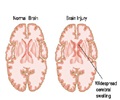
Head injury or traumatic brain injury is a leading cause of disability among children and young adults that leads to varying degrees of physical and mental stability. Fortunately, it is also one of the preventable brain disorder.
Head injury or traumatic brain injury is a leading cause of disability among children and young adults that leads to varying degrees of physical and mental stability. Fortunately, it is also one of the preventable brain disorder.
The radiologic features of abusive head trauma include bleeding within the skull and brain injury. Spinal injuries like spinal subdural hemorrhage -- bleeding in the space between the spinal cord and its tough outer membrane -- are another feature of trauma that may be overlooked clinically in non-fatal cases because of coexistent brain injury and traumatic coma.
"Imaging the whole spine is important in cases of abuse for two reasons," said study author Arabinda Kumar Choudhary, M.D., MRCP, FRCR, pediatric radiologist at Penn State Milton S. Hershey Medical Center and Penn State College of Medicine in Hershey, Pa. "Most of the spinal injuries in abusive head trauma are clinically silent because of extensive injuries elsewhere and lack of a clinical history suggestive of spinal injury. It is important to rule out any significant injury to the spine and spinal cord. Also, spine imaging allows complications of subdural hemorrhage collecting in the spinal canal to be diagnosed earlier."

Accident and Trauma Care - Golden Hour - Taking Care - Don’t
Accident and trauma care is an important public health challenge that requires immediate attention. Injury (trauma) is the leading cause of death for all age groups under the age of 44.
Accident and trauma care is an important public health challenge that requires immediate attention. Injury (trauma) is the leading cause of death for all age groups under the age of 44.
Spinal canal subdural hemorrhage was evident in more than 60 percent of the children with abusive head trauma who underwent thoracolumbar imaging, or imaging of the thorax and the lumbar regions of the spine. In contrast, spinal canal subdural hemorrhage was rare in accidental trauma. Only one of the 70 children in the accidental trauma group had spinal subdural hemorrhage.
Advertisement

Post Traumatic Stress Disorder (PTSD) - Causes, Symptoms, Risk Factors, Complications, Dignosis, Treatment
Post Traumatic Stress Disorder (PTSD), is a mental condition triggered by a traumatic event. PTSD treatment includes pyschotherapy, behavior therapy and medications.
Post Traumatic Stress Disorder (PTSD), is a mental condition triggered by a traumatic event. PTSD treatment includes pyschotherapy, behavior therapy and medications.
"The diagnosis of abusive head trauma is complex," Dr. Choudhary said. "In most of these cases, the history does not fit with the clinical findings. The pathophysiology and diagnosis of abusive head trauma are still being hotly debated, particularly in the courts."
Advertisement

Child Abuse - When God�s Gifts Land in Devils� Clutches
Every second child in India had been a victim of some form of abuse. Worse still, more than 50% of the children had been subjected to sexual abuse of different kinds.
Every second child in India had been a victim of some form of abuse. Worse still, more than 50% of the children had been subjected to sexual abuse of different kinds.
Source-Eurekalert