Before Petra Lazaro-Carrasco Perez got a kidney transplant, the former secretary had to spend three hours a day, three days a week, attached to a dialysis machine at a Madrid hospital.
Holding a job became impossible and vacations were limited to places with a hospital nearby where she could have her blood pumped through the machine to remove the harmful wastes that her kidneys could no longer handle.
Organ Donor Awareness Week 2009
Organ Donor Awareness Week is a platform to educate the public on organ donation and encourage them to sign onto Organ Donor Registries that serve as lifelines to people waiting for organ donations.
Organ Donor Awareness Week is a platform to educate the public on organ donation and encourage them to sign onto Organ Donor Registries that serve as lifelines to people waiting for organ donations.
"You can't imagine the gratitude that I feel. I think about it every day and I am always moved. Sometimes I caress the spot where my kidney is, I really feel thankful to the family, to the kid who died," she added, her voice choked with emotion.
Perez is one of the beneficiaries of a network of transplant coordinators that began in 1989 and is now present in all 168 hospitals in Spain, helping make the country the world leader in organ donations.

Understanding Brain Death
Interactive section of Medindia helps us in better understanding of Brain Death
Interactive section of Medindia helps us in better understanding of Brain Death
The number of deceased donors per million people, a commonly used benchmark, has increased in Spain from 14 in 1989 when the system was put in place to 34.2 last year, the highest rate in the world, according to the health ministry and the International Registry of Organ Donation and Transplantation.
Advertisement
Italy and Portugal have followed suit, putting in place a similar system of transplant coordinators and their organ donation rates are also on the rise. Several other European nations, including Britain, are now considering doing likewise.
Advertisement

Accelerating Organ Donation Through Driving License
The closing ceremony of 'Rally for Life'marks the beginning of another campaign - a campaign to include the 'clause of organ donation...
The closing ceremony of 'Rally for Life'marks the beginning of another campaign - a campaign to include the 'clause of organ donation...
"You have to break the news of the death well, explain the details of the procedure well and really listen. And the family almost always agrees to donate," he said.
Transplant coordinators may spend hours listening to the relatives and asking them to consider organ donation in a private room away from the hospital wards.
A standard practice for transplant coordinators is to ask families what they think their relative would have wanted to happen.
Only about 15 percent of families approached in Spain refuse consent for organ donation, a huge drop from the 40 percent who refused in the 1980s. At a handful of hospitals the refusal rate is nearly zero percent.
The National Organisation of Transplants wants to bring the overall refusal rate in Spain down to 10 percent.
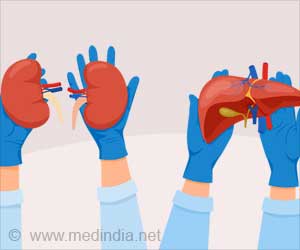
A single decision to donate can help four patients who need a kidney, lung, liver or heart.
In March of this year a record 32 transplants were carried out in a single day in Spain thanks to 13 donations, including a heart.
Under Spain's public health system, which is ranked the seventh best in the world by the World Health Organisation, organ transplants are carried out without cost to the patient.
The recipient and the donor's family never meet, their only point of contact is the transplant co-ordinator.
But despite not knowing who the donor is, many recipients like Iluminada Martin-Crespo feel a long lasting connection to the person whose death gave them a new lease on life.
She received a kidney transplant more than two decades ago when she was 23-years-old. On the second anniversary of the death of the young man who was her donor, she gave birth to twins.
"I believe it is my gift to him," she said.
Spain is working in the European Union to boost organ donations across the bloc. Matesanz sees no reason why the Spanish system could not be copied with equal success in other countries.
"What is important is the way you approach the relatives, not the country you are in," he said.
The health ministry estimates that if the system in place in Spain was extended to the entire EU, the number of donors in the bloc could double to 18,000 from just under 9,000 last year. This could save or improve the lives of at least 20,000 more people each year, the ministry said.
Source-AFP
SRM