Researchers at Fox Chase Cancer Center found that radiation treatment for women who had a lumpectomy for early-stage breast cancer can be safely reduced to four weeks, instead of the usual six to seven weeks, by delivering a higher daily dose, greatly reducing the length of treatment time.
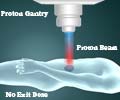
The five-year results of the phase II study will be presented today at the annual meeting of the American Society for Radiation Oncology.The study showed that treatment time can be shortened from the historical six to seven weeks to just four weeks using IMRT (intensity-modulated radiation therapy), a highly sophisticated system of delivering external-beam radiation.
Breast Lumps
Most breast lumps are caused by hormonal changes in a woman and may not be cancerous. Common causes of breast lumps include fibroadenosis, breast cancer, breast cyst.
Most breast lumps are caused by hormonal changes in a woman and may not be cancerous. Common causes of breast lumps include fibroadenosis, breast cancer, breast cyst.
"In this phase II study, women reported acceptable side effects that were no different than would be expected from a usual, more prolonged length of treatment. In addition, with long term follow-up we see cure rates and cosmetic results that are similar to a longer six-week treatment course."Using IMRT, this study examined the delivery of a higher daily dose of radiation over four weeks (versus a lower dose over six to seven weeks).
Another way of reducing treatment length was by incorporating a "boost" into the same four weeks. The lumpectomy site where the tumor was removed is usually treated with a high-dose radiation "boost." The standard "boost" is typically administered after the five weeks of whole breast irradiation and can add another one to two weeks to the treatment time.

Breast Lumps Screening
Breast lumps must never be neglected but instead be subjected to medical examination to rule out cancer.
Breast lumps must never be neglected but instead be subjected to medical examination to rule out cancer.
"This may particularly appeal to women who drive a long distance for radiation, have busy schedules at home or work, or have a large insurance co-pay for each daily radiation treatment." Freedman cautioned that this treatment schedule may not be for all women. "There may be patients who are uncomfortable with the idea of an accelerated treatment and want to be treated with a more conventional six to seven week course of treatment," he says.
Advertisement
Breast Cancer - Causes, Risks, Symptoms, Diagnosis, Staging, Treatment, Prevention & Prognosis
Breast cancer is a cancer that affects the breasts or mammary glands. Early detection and lifestyle changes help in controlling breast cancer.
Breast cancer is a cancer that affects the breasts or mammary glands. Early detection and lifestyle changes help in controlling breast cancer.
The risk of recurrence within five years in the treated breast was low–��.4%, which compares favorably to results with conventional radiation. In addition, patients and their physicians considered the cosmetic results good or excellent in most women.
Advertisement

Chemotherapy - History, Principles, Aim, Types, Side Effcts, Pros & Cons
'Chemo' means medicine or 'drug', 'therapy' means 'treatment'. Chemotherapy refers to the use of cytotoxic drugs in the treatment of cancer.
'Chemo' means medicine or 'drug', 'therapy' means 'treatment'. Chemotherapy refers to the use of cytotoxic drugs in the treatment of cancer.
SRM