
Quiz on Kidney
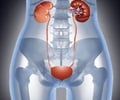
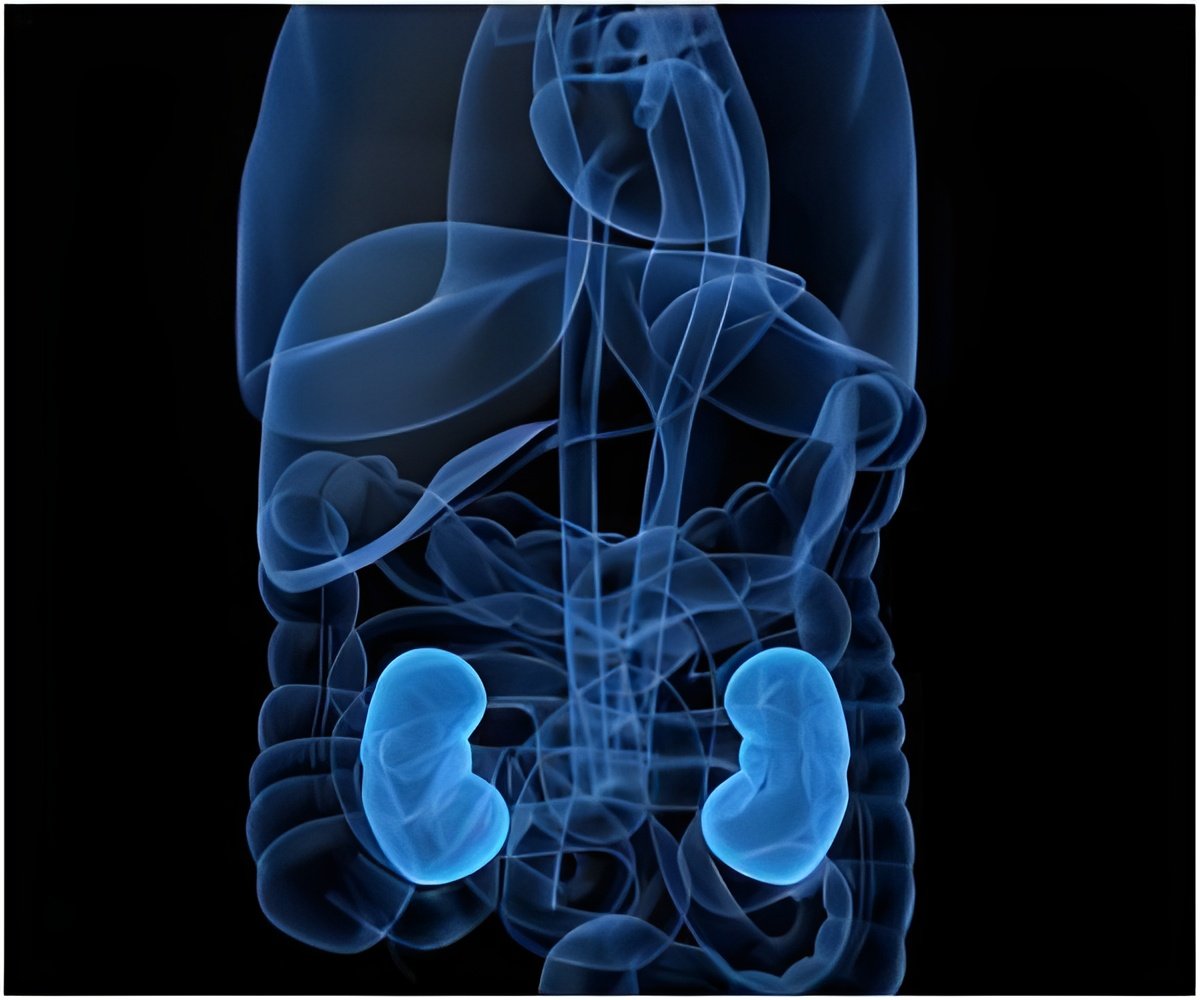
The kidneys are two bean-shaped organs, each about the size of a fist, and are located just below the rib cage, one on each side of your spine.
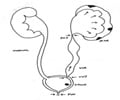
Healthy kidneys filter about half a cup of blood every minute, removing wastes and extra water to make urine. The urine flows from the kidneys to the bladder through two thin tubes of muscle called ureters, one on each side of your bladder. The bladder stores urine. The kidneys, ureters, and bladder are partof the urinary tract.
kidneys remove wastes and extra fluid from your body. Kidneys also remove acid that is produced by the cells of your body and maintain a healthy balance of water, salts, and minerals-such as sodium, calcium, phosphorus and potassium-in your blood ().
 Without this balance, nerves, muscles, and other tissues in the body may not work normally.
Kidneys also make hormones that help
The kidneys are two bean-shaped organs, each about the size of a fist, and are located just below the rib cage, one on each side of your spine.
Healthy kidneys filter about half a cup of blood every minute, removing wastes and extra water to make urine. The urine flows from the kidneys to the bladder through two thin tubes of muscle called ureters, one on each side of your bladder. The bladder stores urine. The kidneys, ureters, and bladder are partof the urinary tract.
kidneys remove wastes and extra fluid from your body. Kidneys also remove acid that is produced by the cells of your body and maintain a healthy balance of water, salts, and minerals-such as sodium, calcium, phosphorus and potassium-in your blood ().

Kidney Preserving Surgery for Kidney Cancer Prevents Osteoporosis
Researchers at the San Diego School of Medicine have emphasized the importance of kidney-sparing surgery to reduce the risk of later-life osteoporosis.
Researchers at the San Diego School of Medicine have emphasized the importance of kidney-sparing surgery to reduce the risk of later-life osteoporosis.
Kidneys also make hormones that help
- Control your blood pressure
- Make red blood cells
- Keep your bones strong and healthy
Advertisement

Alcohol Reduces the Risk of Kidney Cancer
A recent large study among women who drank alcohol has shown that alcohol intake reduces the risk of kidney or renal cell cancer.
A recent large study among women who drank alcohol has shown that alcohol intake reduces the risk of kidney or renal cell cancer.
In another study led by Yan Ding, Ph.D. and Bin Tean Teh, Ph.D. researchers integrated gene expression profiling and RNAi screening data to identify genes involved in CCRCC development and progression.
Advertisement

Foods to Avoid in Kidney Failure
Cut back on salt, restrict your fluid intake and limit consumption of proteins if you suffer from kidney failure.
Cut back on salt, restrict your fluid intake and limit consumption of proteins if you suffer from kidney failure.
Although these therapies significantly extend overall survival, nearly all patients with advanced CCRCC eventually succumb to the disease.
Gene set enrichment analysis indicated that cell-cycle-related genes, in particular PLK1, were associated with disease aggressiveness. Further, the association of PLK1 in both disease aggression and in vitro growth prompted researchers to examine the effects of a small-molecule inhibitor in CCRCC cell lines. Their findings highlight PLK1 as a promising potential therapeutic target for CCRCC.
The studies have been published in Cancer Cell and Cancer Research.
Source-ANI