Gene mutations which are strongly associated with kidney diseases disproportionately affecting African-Americans have been identified by scientists.
The discovery results from studies conducted by researchers at the National Institutes of Health (NIH), and by NIH-funded investigators at the Johns Hopkins University.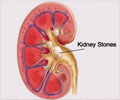
Kidney Stones / Renal Stones - Causes - Symptoms - Diagnosis - Treatment - FAQs
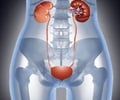
A kidney stone is a solid mass made up of tiny crystals and may appear in any area of the urinary system.
A kidney stone is a solid mass made up of tiny crystals and may appear in any area of the urinary system.
During the study, the group studied nondiabetic kidney diseases that can lead to chronic kidney disease and, in severe cases, to kidney failure requiring long-term dialysis or a kidney transplant.
With the aid of a type of genome association, which relies on differences in the frequency of gene variants between populations, the researchers were able to identify several variations in the MYH9 gene as major contributors to excess risk of kidney disease among African-Americans.

Diet for Kidney Stones
Diet for kidney stone should comprise of calcium-rich foods, increased fluid intake. Other dietary recommendations depends on the type of kidney stone.
Diet for kidney stone should comprise of calcium-rich foods, increased fluid intake. Other dietary recommendations depends on the type of kidney stone.
Both research teams found statistically significant associations of MYH9 variants with FSGS, HIV-associated FSGS, and all nondiabetic kidney failure.
Advertisement

Ureteroscopy - Overview
Ureteroscopy is an endoscopic procedure that clears stones from the ureter or the kidney.
Ureteroscopy is an endoscopic procedure that clears stones from the ureter or the kidney.
According to them, the increased risk among African-Americans with these variants is more than 300 percent for FSGS, more than 500 percent for HIV-associated FSGS, and more than 100 percent for all nondiabetic kidney failure.
Advertisement

Kidney stones - Colics due to a moving Kidney stone
Interactive section of Medindia explains Colics due to a moving Kidney stone
Interactive section of Medindia explains Colics due to a moving Kidney stone
"MYH9 genetic variations account for some of the excess risk of kidney disease due to hypertension, and much of the excess risk due to FSGS, and HIV-associated FSGS in African-Americans. We hope this finding will lead to personalized medical therapy that will reduce the burden of chronic kidney disease," said Dr. Jeffrey B. Kopp, a kidney specialist and lead author of the NIH study.
While diabetes is one of the leading causes of kidney failure, none of the two teams found any association between the MYH9 variants and diabetes-related kidney failure in African-Americans.
"This finding suggests that the mechanisms leading from onset of chronic kidney disease to kidney failure may differ based on the inciting cause. Therefore, understanding the role that MYH9 plays in kidney failure may ultimately lead to development of drug therapies that target more specific, rather than common, genetic pathways to prevent kidney disease progression more effectively," said Dr. W.H. Linda Kao and Dr. Rulan S. Parekh, the lead and senior authors of the Hopkins study.
"These two studies are important not only because the MYH9 risk variants account for nearly all the excess burden of FSGS and HIV-associated kidney disease in African-Americans, but also because MYH9 is the first kidney disease gene identified that explains an important health disparity and involves common forms of kidney disease.
In addition, the MYH9 gene's estimated relative risk is higher than that observed for nearly all genetic factors discovered by genome-wide scans, including those for prostate cancer, diabetes, cardiovascular disease, breast cancer, and hypertension," said Dr. Cheryl Winkler, principal scientist with the National Cancer Institute, senior author of the NIH intramural study, and a co-author of the Johns Hopkins study
The researchers say that the different frequencies of genetic variants between African Americans and European Americans have potential implications for future screening strategies for African-Americans with hypertension.
They add that further research will be needed to determine whether individuals identified as having hypertensive kidney disease actually have undiagnosed FSGS.
While the variants identified through the present research are markers indicating that the MYH9 gene is the location of the disease-causing variations, the specific variants have not yet been definitively identified.
The researchers say that further studies will be needed to identify the specific causal variants.
Highlighting the fact that most individuals with the gene variants do not develop kidney disease, the authors conclude that additional genetic or environmental factors may contribute to causing kidney disease in particular individuals with the MYH9 variants.
The findings have been reported in two research papers published in the online edition of the journal Nature Genetics.
Source-ANI
RAS/L