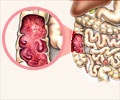
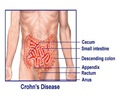
Scientists have identified a gene, called tumor necrosis factor receptor superfamily member 6B (TNFRSF6B) that influences whether children get diseases like Crohn's disease early in life.
The findings of the study by an international team also points to a potential new target for treatment.
Scientists Identify Two New Genes Linked to Inflammatory Bowel Disease in Children
Researchers from Children's Hospital of Philadelphia have identified two genes that are responsible for inflammatory bowel disease (IBD) in children.
Researchers from Children's Hospital of Philadelphia have identified two genes that are responsible for inflammatory bowel disease (IBD) in children.
Kugathasan's future research will focus on discovery of additional IBD genes and in depth study of how these genes influence disease onset and progression.
"Our novel candidate gene is in the same inflammatory pathway as some other susceptibility genes, so it may represent an accessible target for treatment," Nature quoted Kugathasan, as saying.

Inflammatory Bowel Disease Linked to Nerve Damage
People with inflammatory bowel disease may also be at risk for developing nerve damage and other neurological problems.
People with inflammatory bowel disease may also be at risk for developing nerve damage and other neurological problems.
However, he noted that the incidence of disease has drastically increased over the last half century. He also suggested a key role of the environment in disease development. Smoking is an environmental factor that is particular strong in increasing the risk of Crohn's disease.
Advertisement

Anti-cancer Therapies may Be Derived from Marine Animals
A new study suggests that natural products derived from marine animals may have potential use in anti-cancer therapies, and help improve drug delivery.
A new study suggests that natural products derived from marine animals may have potential use in anti-cancer therapies, and help improve drug delivery.
The study compared the DNA of more than 1,000 children diagnosed with inflammatory bowel diseases at the average age of 11 with 4,250 controls (disease-free children), and confirmed the findings in a larger set of patients established by the British Wellcome Trust Case Control Consortium.
Advertisement

'Good' Gut Bacteria Linked to Better Outcome in Inflammatory Bowel Disease
Scientists at the California Institute of Technology have found that a good bacterium in the gut called Bacteroides fragilis produces a sugar molecule that may offer a potential
Scientists at the California Institute of Technology have found that a good bacterium in the gut called Bacteroides fragilis produces a sugar molecule that may offer a potential
Most of the SNPs made little difference when it came to affecting the risk of inflammatory bowel disease, but a few stood out, and two had not been seen before.
One new SNP led the scientists to TNFRSF6B, whose activity they found was associated with the degree of inflammation in the colon. The function of the second SNP is still under investigation.
TNFRSF6B encodes a protein that lengthens the duration of an immune response by regulating the longevity of activated white blood cells.
Kugathasan said that a related protein, tumor necrosis factor alpha, is the target of an existing antibody treatment for inflammatory bowel disease. This suggests that antibodies to TNFRSF6B could also be helpful in controlling the disease, he says.
The study was published online by the journal Nature Genetics.
Source-ANI
RAS/M