Cervical Cancer - Types, Causes, Symptoms, Diagnosis, Treatment, Complications & Prevention
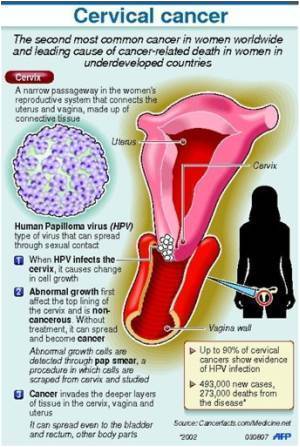
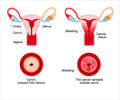
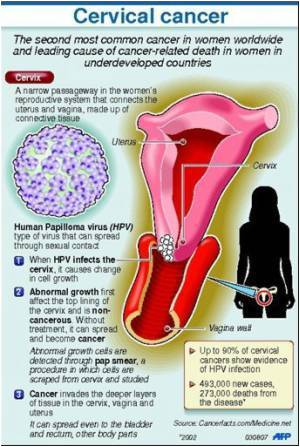
Cancer cervix refers to cancerous growth in the cervix and usually occurs in the transition called squamo-columnar junction.
Cancer cervix refers to cancerous growth in the cervix and usually occurs in the transition called squamo-columnar junction.
"We have been involved for several years in research looking at the attitudes toward HPV vaccination and acceptance of vaccine," said senior author and co-principal investigator Gregory D. Zimet, Ph.D., professor of pediatrics and clinical psychology in the Section of Adolescent Medicine at the IU School of Medicine. "This project looked at an older population of women to determine their attitudes about HPV vaccination and what factors influenced their attitudes."
Researchers found moderately strong interest in receiving the vaccination if it is available free of charge, said first author Nathan W. Stupiansky, Ph.D., a fellow with the IU Department of Pediatrics, Section of Adolescent Medicine. As out-of-pocket costs increased, interest decreased for the vaccine, which typically costs $120 per dose and requires three doses.

About Cancer in Women
Cancer is one of the frequently talked about and most feared disease that falls under the genre of lifestyle diseases that have evolved, rather rapidly, in the past two decades.
Cancer is one of the frequently talked about and most feared disease that falls under the genre of lifestyle diseases that have evolved, rather rapidly, in the past two decades.
Factors that did not increase interest in the vaccine included having a friend or relative who had cervical cancer or personally having had a prior sexually transmitted infection.
Advertisement
Researcher Announces Significant Advance in Treatment of Cervical Cancer
A significant advance in the treatment of cervical cancer has been made by a medical researcher at the University of Leicester.
A significant advance in the treatment of cervical cancer has been made by a medical researcher at the University of Leicester.
"With the accumulating empirical evidence that vaccination of women over the age of 26 can be beneficial, it is important to understand specific factors associated with HPV vaccine acceptability," said Dr. Stupiansky. "This study clarifies some of the issues for acceptance including cost and prior knowledge of the vaccine.
Advertisement

Vaccine To Protect Against Cervical Cancer Approved
For the first time women will have a vaccine to protect themselves from cervical cancer as the United States has approved.
For the first time women will have a vaccine to protect themselves from cervical cancer as the United States has approved.
HPV is the most common sexually transmitted infection in the U.S. and can be found in more than 25 percent of all women aged 14 to 59 years. The highest rates are among women between the ages of 20 and 24 years but remain above 25 percent for women up to age 49. An estimated 1.6 million new infections occur each year in women older than 26 years of age. HPV is responsible for all cases of cervical cancer and genital warts and is the cause of some cases of anal, throat, vulvar and vaginal cancers.
Source-Eurekalert