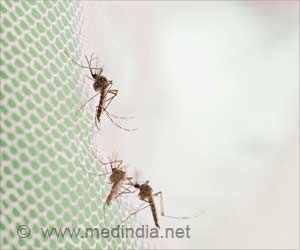
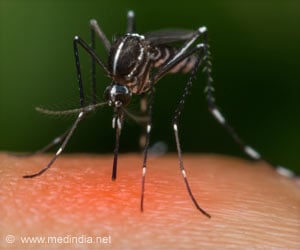
The black flies that transmit river blindness have re-emerged in parts of Ivory Coast, sparking a fresh campaign to ensure villagers can work their fields without fear.
Health workers are handing out a drug, whose distribution was stopped three years ago, that prevents the worst effects of the disease, irreversible loss of vision.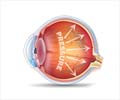
Glaucoma - Causes, Symptoms, Diagnosis, Treatment & Prevention
Glaucoma is a group of disorders involving the optic nerve, often associated with a rise in intraocular pressure. Uncontrolled glaucoma can lead to blindness.
Glaucoma is a group of disorders involving the optic nerve, often associated with a rise in intraocular pressure. Uncontrolled glaucoma can lead to blindness.
But some local people who recall the past are pushing for more radical measures.
"The situation before was dramatic," recalled Konan Kouadio, a villager in his seventies wearing large, tinted spectacles to conceal his own sightless eyes. "We had many blind people in the heart of the community."

Agriculture is one of Ivory Coast's main sources of wealth, and the people in this region produce food crops and cocoa that are vital not only to their own livelihoods but to the country's economy as well.
Advertisement

In March, the country's National Programme Against Blindness (PLNCE) conducted an epidemiological study in 15 villages and confirmed that the black flies were back in force.
Advertisement

Yoga and Eye Sight
Human eyes need care and attention. Eyesight is improved when the muscles of the eyes are relaxed. Yoga can help balance the correlation between eyes and mind.
Human eyes need care and attention. Eyesight is improved when the muscles of the eyes are relaxed. Yoga can help balance the correlation between eyes and mind.
Although the bolder residents still venture out, they risk being bitten. But as community health worker Raphael Konan Kouadio pointed out their dilemma: "You can't abandon your crops or you are going to die of hunger."
An estimated 500,000 people are at risk with the resurgence of the flies, which now haunt a zone that extends 15 kilometres (nearly 10 miles) around the river.
The disease, transmitted by black flies of the Simulium species whose bite can be extremely unpleasant, has in the past devastated local communities.
In the 1970s and '80s, villagers bitten by the insects as they worked in fields near the rivers gradually lost sight, as the worm larvae transmitted by the bite hatched and grew.
Though the disease is endemic in central and west Africa, fertile river areas are the most dangerous because that is the insect's natural habitat -- they lay their eggs in fast-flowing waters. Hence the popular name for the disease that is more correctly called onchocerciasis, which can also produce a disfiguring skin inflammation and intense itching.
But Kouadio-Allaikro is only one of many villages in this district, at the mouth of the Kossou hydroelectric dam in the Yamoussoukro region, where the flies have returned.
"The onchocerciasis situation is more and more worrying in the zones extending south of the forest where 15 percent (of the population) has been affected," said Souleymane Yeo, who heads up the PLNCE programme.
For him, the distribution of the anti-parasitic drug ivermectine, which started in September, came not a moment too soon. Local villagers knew it would allow them to get back to working the fields and fishing the rivers.
"Onchocerciasis no longer turns people blind thanks to the distribution of these medicines," said Emery Patrice Bosso, of Helen Keller International, which finances programmes against the disease.
But there remain practical problems on the ground, for as good as the treatment may be, getting the medicines out to the villages is no easy task.
"The work of volunteers is no longer guaranteed," said Kouadio, himself a volunteer. The main problem is the lack of transport to get to the most far-flung villages.
"I cover 10 villages without even a motorbike," he said. And as much as he wants to do the work, he said he could not carry on under current conditions.
Though thankful for the drugs, some local people would like to see the return of the weapon the government used to fight the disease effectively in the past.
They want the length of the river again to be dosed with insecticide.
Source-AFP
SRM