Lung Cancer Screening - FAQs
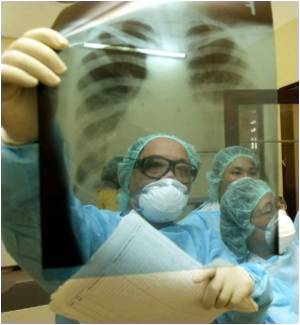
Lung cancer accounts for nearly 1.3 million deaths annually worldwide. Lung cancer screening can help in early detection of cancer and possible cure.
Lung cancer accounts for nearly 1.3 million deaths annually worldwide. Lung cancer screening can help in early detection of cancer and possible cure.
He says that like mammography for breast cancer and colonoscopy for colon cancer — which can spot very early cancers and even pre-cancerous conditions — CT scans can be used to identify lung nodules, some of which do prove to be lung cancer. “However, only one of 10 nodules identified on CT scans eventually prove to be lung cancer,” explains Dr. Yendamuri. “And while biopsies are the sure way to detect a cancer, procedures are much more involved when it comes to lung masses than they are for breast and colon masses.”
Dr. Yendamuri, Attending Surgeon in RPCI’s Department of Thoracic Surgery, says that his team will first find blood-based biomarkers for the disease. “Specifically, we will look at microRNAs, small molecules which regulate other molecules, thereby influencing normal physiology as well pathology.”

Quiz on Lung Cancer
Lung cancer and smoking are closely associated. Lung cancer risk increases with the intensity of smoking. For more details, take this quiz.
Lung cancer and smoking are closely associated. Lung cancer risk increases with the intensity of smoking. For more details, take this quiz.
“At that point we will create a whole blood microRNA assay for lung cancer,” he says. “We will then validate our findings by checking for these biomarkers in blood samples of lung cancer patients both before and after resection surgery, to understand whether these signatures represent cancer presence versus cancer susceptibility.”
Advertisement
Lung Biopsy - Indications - Procedures - Risks - FAQs - Reference
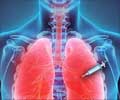
The procedure by which tissue samples are obtained from the lung is known as lung biopsy. The biopsy tissues obtained from the lungs are examined by a pathologist.
The procedure by which tissue samples are obtained from the lung is known as lung biopsy. The biopsy tissues obtained from the lungs are examined by a pathologist.
Source-Newswise

The Lungs
The lungs are our organs of respiration. It is within these, that exchange of gases takes place.
The lungs are our organs of respiration. It is within these, that exchange of gases takes place.