New research has indicated that the earthquake that jolted Wenchuan, China, in 2008 has had an acute impact on the brain function of physically healthy survivors, and even poses a risk to their mental health.
Working with collaborators from universities in China, the US and Liverpool, researchers at the Institute of Psychiatry focussed on the survivors of the earthquake that occurred on May 12 last year.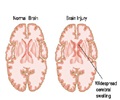
Head Injury | Brain Injury Overview Types Causes Symptoms Diagnosis Treatment
Head injury or traumatic brain injury is a leading cause of disability among children and young adults that leads to varying degrees of physical and mental stability. Fortunately, it is also one of the preventable brain disorder.
Head injury or traumatic brain injury is a leading cause of disability among children and young adults that leads to varying degrees of physical and mental stability. Fortunately, it is also one of the preventable brain disorder.
Previous animal studies have demonstrated the importance of limbic, paralimbic, striatal, and prefrontal structures of the brain in stress and fear responses.
Human studies, which have focused primarily on patients with clinically established posttraumatic stress disorders, have reported abnormalities in similar brain structures.

About Brain Tumor
Brain tumors are the abnormal growth of brain cells that may be benign or metastatic. Brain tumors account for about 2.4% of all the tumor diagnosesandare most challenging due to their critically delicate location.
Brain tumors are the abnormal growth of brain cells that may be benign or metastatic. Brain tumors account for about 2.4% of all the tumor diagnosesandare most challenging due to their critically delicate location.
The epicentre of the devastating earthquake was in Wenchuan, in the Sichuan Province of China.
Advertisement
About Schizophrenia
Schizophrenia is a mental disorder characterized by symptoms of thought, behavior and social problems.
Schizophrenia is a mental disorder characterized by symptoms of thought, behavior and social problems.
The researchers found that a significant proportion of the survivors (around 20 per cent) are likely to develop stress-related disorders, such as acute stress disorder (ASD) and posttraumatic stress disorder (PTSD).
Advertisement
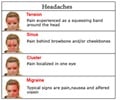
Head aches - Types - Symptoms - Migraine - Diagnosis - Treatment
A headache literally means ‘pain in the head’. It is a common complaint that may occur frequently in some
A headache literally means ‘pain in the head’. It is a common complaint that may occur frequently in some
The researchers used a method known as 'resting-state fMRI' to examine 44 healthy survivors and 32 controls shortly after the massive psychological trauma.
They found that significant alterations in brain function similar to those observed in posttraumatic stress disorders could be seen shortly after major traumatic experiences, highlighting the need for early evaluation and intervention for the survivors.
The results of the study show that individuals experiencing severe emotional trauma showed hyperactivity in certain areas of the brain, and decreased functional connectivity in others, shortly after the massively traumatic Wenchuan earthquake.
Particularly, the findings indicated that traumatic experiences affect not only regional function but also dynamic interactions within brain networks.
It is not clear if this pattern of brain alteration remains the same or evolves further over the following weeks or months after the traumatic experiences.
"A better understanding of the impact of traumatic events on brain function may help us identify those in need of early treatment and reduce the long-term psychological impact in trauma survivors of national disasters, military conflict, and other causes of severe emotional distress," said Mechelli.
The results of the study have been published in PNAS online.
Source-ANI
RAS