Two reports in the December 14/28 issue of Archives of Internal Medicine, one of the JAMA/Archives journals say that doses of radiation from commonly performed computed tomography (CT) scans vary widely, appear higher than generally believed and may contribute to an estimated tens of thousands of future cancer cases.
CT scans have become increasingly common in the United States—about 70 million were performed in 2007, up from 3 million in 1980, according to background information in one of the articles. "While CT scans can provide great medical benefits, there is concern about potential future cancer risks because they involve much higher radiation doses than conventional diagnostic X-rays," the authors of one report write. For example, a chest CT scan exposes the patient to more than 100 times the radiation dose of a routine chest X-ray. "The risks to individuals are likely to be small, but because of the large number of persons exposed annually, even small risks could translate into a considerable number of future cancers."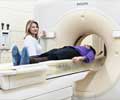
Computed Tomography Scan (CT Scan)
Computed Tomography (CT) scan is a type of medical examination that uses X-rays and computer processing to create sectional images of the body to provide more efficient results than X-rays.
Computed Tomography (CT) scan is a type of medical examination that uses X-rays and computer processing to create sectional images of the body to provide more efficient results than X-rays.
Radiation dosage varied widely between different types of CT studies; median (midpoint) doses ranged from 2 millisieverts for a routine head CT scan to 31 millisieverts for a multiphase abdomen and pelvis scan. "Within each type of CT study, effective dose varied significantly within and across institutions, with a mean [average] 13-fold variation between the highest and lowest dose for each study type," the authors write.
The estimated number of CT scans that would lead to the development of one cancer case also varied by type of CT scan and also by each patient's age and sex. For instance, an estimated one in 270 women and one in 600 men who undergo CT coronary angiography (a heart scan) at age 40 will develop cancer as a result. One cancer case will likely occur among every 8,100 women and 11,080 men who had a routine head CT scan at the same age. "For 20-year-old patients, the risks were approximately doubled, and for 60-year-old patients, they were approximately 50 percent lower," the authors write.
About Magnetic Resonance Imaging(MRI)
Encyclopedia section of medindia gives general info about Magnetic Resonance Imaging
Encyclopedia section of medindia gives general info about Magnetic Resonance Imaging
In another paper, Amy Berrington de González, D. Phil., of the National Cancer Institute, Bethesda, Md., and colleagues constructed a risk model to estimate age-specific cancer risks for each scan type. Data were derived from previous reports of radiation-associated cancer risks, national surveys and insurance claims.
Advertisement

Introduction of Nuclear Medicine
Encyclopedia section of medindia gives general info about Nuclear Medicine
Encyclopedia section of medindia gives general info about Nuclear Medicine
"Changes made to practice now could help to avoid the possibility of reaching the level of attributable risk suggested above (2 percent). Our detailed estimates highlight several areas of use in which the public health impact may be largest, specifically abdomen and pelvis and chest CT scans in adults aged 35 to 54 years," the authors conclude. "Further work is needed to investigate the balance of the risks and benefits from CT scan use and to assess the potential for dose or exposure reduction."(Arch Intern Med. 2009;169[22]:2078-2086, 2071-2077. Available pre-embargo to the media at www.jamamedia.org.)
Advertisement
Editorial: Enthusiasm for CT Scans Led to Explosion in Use
"The articles in this issue make clear that there is far more radiation from medical CT scans than has been recognized previously, in amounts projected to cause tens of thousands of excess cancers annually," writes Rita F. Redberg, M.D., M.Sc., of the University of California, San Francisco, and editor of Archives of Internal Medicine, in an accompanying editorial. "Also, as these scans have become more sensitive, incidental findings lead to additional testing (and often more radiation), biopsies and anxiety."
"Although a guiding principle in medicine is to ensure that the benefit of a procedure or therapy outweighs the risk, the explosion of CT scans in the past decade has outpaced evidence of their benefit. Although there are clear instances when CT scans help determine the treatment course for patients, more and more often patients go directly from the emergency department to the CT scanner even before they are seen by a physician or brought to their hospital room."
"To avoid unnecessarily increasing cancer incidence in future years, every clinician must carefully assess the expected benefits of each CT scan and fully inform his or her patients of the known risks of radiation," Dr. Redberg concludes.
Source-Eurekalert
RAS