
About Transplantation
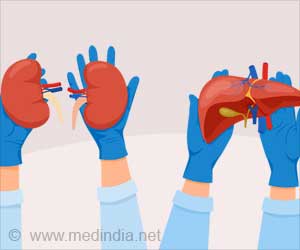
Since the early times, the novel idea of transplanting tissues and other body parts from one organism to the other has captured the imagination of successive generations.
Since the early times, the novel idea of transplanting tissues and other body parts from one organism to the other has captured the imagination of successive generations.
Protein therapeutics
The work using protein therapeutics aims to reduce the risk of an organ being damaged in the hours and days following a transplant, by maintaining the quality of the donor organ prior to transplantation.

Liver Transplantation - Facts, Contraindications, Procedure, Follow up, Complications & Prognosis
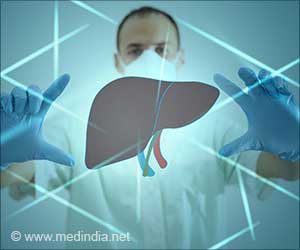
Liver transplantation is a surgical option for the treatment of liver failure where the diseased liver is replaced with a healthy one.
Liver transplantation is a surgical option for the treatment of liver failure where the diseased liver is replaced with a healthy one.
The complement system is usually kept in check by 'regulators' which are found on the surface of the cells. Their presence prevents it from attacking the body's own cells. However, when an organ is removed for transplantation, complement regulators are lost from the surface of cells due to the lack of blood flow and consequent lack of oxygen. Unregulated, the complement system begins to attack the organ's own cells, severely damaging it. Once the transplant is complete, the effect can be amplified as the complement system supports the recipient's own blood cells in its attack on the organ – resulting in organ rejection.
Advertisement

Dr Richard Smith, Director of Protein Therapeutics at the MRC Centre for Transplantation said: 'We have engineered a protein Mirococept to combat organ damage during transit outside the human body and immediately after transplantation. It is an artificial replacement for complement regulators. If enough Mirococept proteins reach the organ's cell membranes, it can prevent the complement cascade from starting and increases the number of donor organs suitable for transplantation.'
Advertisement

Dr Richard Smith and his team have also introduced the 'tail' in Mirococept which is specifically designed to latch on to cell walls. He continued: 'When we are preparing an organ for transplant we wash it in a solution, and the risk is that the protein will be washed off the organ. The 'tail' we have developed snags onto the cell surface and holds it there. Imagine the difference between throwing a bucket of water at a wall and throwing a bucket of paint, the water will run off but the paint will stick. This technique, known as tethering, not only enables the protein Mirococept to reach particular types of cells, but also gives it a much better chance of staying there.'
Mirococept has already been tested in a pilot scale clinical study of 16 kidney transplant patients and this showed that the tethering technique was clinically feasible and safe. The next step is large-scale clinical trials to test whether this method has clinical benefits for patients undergoing organ transplants.
Cell therapy
The other exciting area of research is cell therapy – a type of potential treatment scientists hope will improve the longevity of a transplant.
Currently, transplant recipients have to stick to a strict regimen of potent drugs that pacify the immune system and hopefully prevent rejection of the donated organ. However, because these drugs suppress the immune system, they may also bring serious health complications, such as infections and some types of cancer.
Scientists at King's are looking at other ways of prolonging the life of a transplant, which involves using a type of white blood cell – regulatory T cells found in healthy individuals – as a treatment to prevent an individual's immune system from becoming over active and rejecting the organ.
Professor Giovanna Lombardi, Professor of Human Transplant Immunology at the MRC Centre for Transplantation, said: 'Animal studies have already shown that these cells can effectively prevent a transplant being rejected. We are currently identifying ways to 'grow' these cells from the blood of healthy individuals in the laboratory without them losing their ability to suppress other immune cells and are carrying out a study of the number and quality of regulatory T cells from patients on the waiting list for a kidney transplant. We are optimistic that we will be able to carry out the first clinical trials in transplant patients in the next few years.'
It is expected that any clinical trials would involve the isolation and expansion of these cells. The cells would be taken from a patient, multiplied in the laboratory into the numbers of cells needed, and reintroduced into the patients themselves. In any clinical trial, these cells would be generated in Good Manufacturing Practice (GMP) compliant facilities in development at Guy's Hospital.
The new research developments were presented at the British Science Festival in Birmingham.
Source-Eurekalert