
Top 10 Amazing Brain Facts
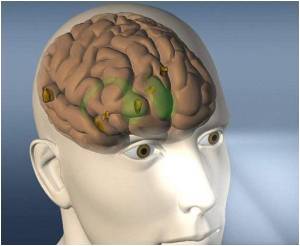
The brain is the most amazing and complex organ in this universe and has billions of nerve cells called as neurons. Medindia brings to you the top 10 amazing brain facts.
The brain is the most amazing and complex organ in this universe and has billions of nerve cells called as neurons. Medindia brings to you the top 10 amazing brain facts.
"Right now, we're trying to develop diamond-coated electrodes for implantable devices which last a lifetime. A patient would have one surgery and that's it," said Martin.
Unlike standard electrodes, diamonds won't corrode, said Martin.

Brilliant Human Brain
The most amazing and complex organ in the entire universe, the human brain continues to remain an enigma.
The most amazing and complex organ in the entire universe, the human brain continues to remain an enigma.
The key is to use just enough diamond.
Advertisement

Quiz on Brain
The human brain is exquisitely intrinsic and is the seat of all emotions. If you are curious about what makes you bad, sad, silly or glad this quiz on the brain will satiate you.
The human brain is exquisitely intrinsic and is the seat of all emotions. If you are curious about what makes you bad, sad, silly or glad this quiz on the brain will satiate you.
Martin's lab grows diamond film - real diamond - under high temperature, in a vacuum. By adding impurities they change the diamond's properties.
Advertisement
Because diamond is made at 800 to 900 degrees Celsius, a temperature that would melt the polymer base, Martin first selectively grows a series of tiny squares of diamond film on silicon dioxide, the stuff of sand and quartz.
Zorman's group then lays down a thin flexible polymer that fills in the gaps between diamonds, followed by a layer of metal that connects to the back of the diamonds and will conduct electricity.
Lastly, he adds a thick layer of flexible polymer base. They then dip the device in hydrofluoric acid, which eats away the silicon dioxide and frees the probe.
Small, cortical probes that measure chemical changes at a location in the brain or along a nerve have two diamond contacts affixed.
These probes are designed to assist health researchers who are trying to understand the role of chemicals in stimulating nerves or communicating within the brain.
Recent research has found, for example, a link between a deficiency in the neurotransmitter dopamine and Parkinson's disease.
Martin and Zorman also build electrodes with arrays of eight or more electrically-connected diamond segments.
These are designed for neruoprostheses, to stimulate nerves, enabling a paralysed patient to stand or a blind patient to see.
Lab tests show one diamond-coated electrode can monitor chemical and electrical signals as well as stimulate nerves. (
Source-ANI