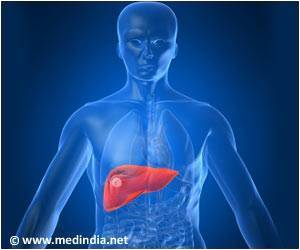
According to researchers, vestigial organs like appendix, spleen, tonsils and various redundant veins, which have long been considered useless, are not really expendable as previously believed.
The researchers have found that, more often than not, some of these "junk parts" are actually hard at work.
Urine Test To Diagnose Appendicitis On The Anvil
A simple urine test to detect appendicitis may soon be available, if scientists have their way.
A simple urine test to detect appendicitis may soon be available, if scientists have their way.
In a new study, the researchers have found that spleen might have a critical role to play in healing damaged hearts.
Spleen-the kidney shaped organ tucked into the upper left of a person's abdomen-helps spot infections and filters out red blood cells that are damaged or old. However, it is considered as nonessential, and one can live even without it.

Air Pollution Could Raise Risk of Appendicitis
Air pollution could raise risk of appendicitis, it has been found.
Air pollution could raise risk of appendicitis, it has been found.
Previously, scientists had thought monocytes were made only in bone marrow, like other types of white blood cells, and were "stored" in the bloodstream.
Advertisement

Appendectomy
Slides and animation of Appendicitis and Appendectomy by both Open and Laparoscopic surgical methods.
Slides and animation of Appendicitis and Appendectomy by both Open and Laparoscopic surgical methods.
"If you're going to survive a heart attack, your heart has to heal the proper way, and that depends on monocytes. It was thought that the monocytes that accumulated immediately after a heart attack were ones that had been circulating in the blood. But we did calculations and found that the number that accumulated in the heart far exceeded the number in circulation," National Geographic News quoted Swirski as saying.
Advertisement
One of the most famous "junk" organs is the appendix, a narrow tube that hangs off one end of the colon. But it's turned out to be important even today-in certain circumstances.
"It's hard to figure out what the appendix does when you're studying superclean animals and people," said Bill Parker, assistant professor of surgery at Duke University Medical Center and one of the researchers who exposed the appendix's secrets in a 2007 study.
Far from useless, the organ is actually a storehouse of beneficial bacteria that help us digest food (interactive digestive-system guide).
Parker said that the appendix evolved for a much dirtier, parasite-plagued lifestyle than the one most people live in the developed world today, but where diarrhoeal disease is common, for example, this organ is apparently vital for repopulating intestines with helpful bacteria after an illness.
Laitman said that another example of anatomy lagging behind lifestyle is collateral circulation.
Certain systems of veins and arteries ensure blood flow when the main paths are blocked or damaged. The systems appear to be truly vestigial, at least for now.
He said that elbows, knees, and shoulders, for example, all have collateral circulation, but the heart and much of the brain don't.
"Why would we adapt enormous redundancy in an elbow but not where it really matters? The answer is unsettling. When do we have strokes and heart attacks? Our 50s, 60s. When the blueprints for our species were being drawn up, nobody lived that long," said Laitman.
He added that the fact that our bodies evolved while humans lived short lives hunting and gathering is one key to understanding many "useless" body parts.
Source-ANI
ARU