It has been found that even though obesity is a leading contributor to heart disease, it also appears to play a protective role in a range of cardiovascular problems.
Researchers found that obese heart patients respond better to strokes and heart attacks compared to normal or underweight patients.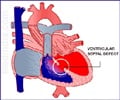
Congenital Heart Disease
Heart diseases that are present at birth are called “ Congenital heart diseases”.
Heart diseases that are present at birth are called “ Congenital heart diseases”.
However, researchers say, losing weight is still best because obesity triggers more heart attacks and strokes.
The study has been published in the May 26, 2009, issue of the Journal of the American College of Cardiology.
"Obese patients with heart disease respond well to treatment and have paradoxically better outcomes and survival than thinner patients," said Carl Lavie, M.D., F.A.C.C., medical director of Cardiac Rehabilitation and Prevention, Ochsner Medical Center, New Orleans, LA and lead author of the article.
"Although these patients have a more favorable short- and long-term prognosis, we don't yet understand the mechanisms for why this might be the case," the expert added.
Advertisement
Dr. Lavie speculates that excess weight may be somewhat protective because these patients have more reserves to fight disease than thinner patients. Another explanation might be that obese patients present with problems earlier due to physical deconditioning (being out of shape) and other non-cardiovascular symptoms and, therefore, have the opportunity to be diagnosed with milder disease.
Advertisement
"Obesity is often what's causing high blood pressure, blockages in arteries, and increased risk of sudden death in the first place. Such excess weight has adverse effects on all of the major cardiovascular risk factors and has increased the prevalence of heart disease," he said.
"Taken together, most studies are supportive of purposeful weight loss for preventing and treating cardiovascular disease," he added.
Health-promoting behaviors to stay active and lose weight can also confer benefits beyond initial heart disease.
Source-ANI
TAN