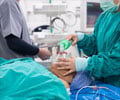
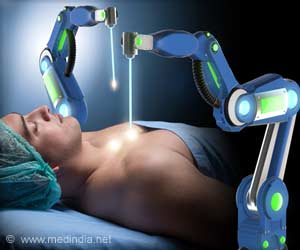
The world's first totally automated anaesthesia system dubbed as 'McSleepy' has been developed by researchers at McGill University and the McGill University Health Centre (MUHC). t
The new system administers drugs for general anesthesia and monitors their separate effects completely automatically, with no manual intervention."We have been working on closed-loop systems, where drugs are administered, their effects continuously monitored, and the doses are adjusted accordingly, for the last 5 years," said Dr. Thomas M. Hemmerling of McGill's Department of Anaesthesia and the Montreal General Hospital, who heads ITAG (Intelligent Technology in Anaesthesia research group), a team of anaesthesiologists, biomedical scientists and engineers.
"Think of 'McSleepy' as a sort of humanoid anaesthesiologist that thinks like an anaesthesiologist, analyses biological information and constantly adapts its own behaviour, even recognizing monitoring malfunction," he added.
Researchers performed the technique on a patient who underwent a partial nephrectomy, a procedure that removes a kidney tumour while leaving the non-cancerous part of the kidney intact, over a period of 3 hours and 30 minutes.
To manipulate the various components of general anaesthesia, the automated system measures three separate parameters displayed on a new Integrated monitor of anaesthesia (IMATM): depth of hypnosis via EEG analysis, pain via a new pain score, called AnalgoscoreTM, and muscle relaxation via phonomyographyTM, all developed by ITAG.
Then, the system administers the appropriate drugs using conventional infusion pumps, controlled by a laptop computer on which 'McSleepy' is installed.
Advertisement
'McSleepy' helps the anaesthesiologist similarly in the way an automatic transmission helps people when driving and allows them to focus more on other aspects of direct patient care.
Advertisement
Besides that, this technology can be easily incorporated into modern medical teaching programs such as simulation centres and web-based learning platforms.
"It will probably take two years to perfect the system," Dr. Hemmerling said.
He hopes that a commercial system might be available within the next 5 years.
Source-ANI
RAS/M