Remote monitoring of patients in intensive care units (ICUs) is not associated with an overall improvement in survival, a new study has found.
Experts suggest that intensive care physicians look after ICU patients onsite because of an associated lower rate of illness and death.
Accident and Trauma Care - Golden Hour - Taking Care - Don’t
Accident and trauma care is an important public health challenge that requires immediate attention. Injury (trauma) is the leading cause of death for all age groups under the age of 44.
Accident and trauma care is an important public health challenge that requires immediate attention. Injury (trauma) is the leading cause of death for all age groups under the age of 44.
"Remote monitoring may be a partial solution for the intensivist shortage, but it is expensive, its use is increasing, and there are few data in the peer-reviewed literature evaluating its effect on morbidity and mortality," they added.
Eric J. Thomas, of the University of Texas Health Science Center at Houston, and colleagues assessed the effect of a tele-ICU intervention on mortality, complications, and length of stay (LOS) in 6 ICUs of 5 hospitals in a large U.S. health care system by measuring these outcomes before and after implementation of the tele-ICU.

Burns
Burn injuries have reached epidemic proportions in recent years. Burn accident statistics show that at least 50% of all burn accidents can be prevented.
Burn injuries have reached epidemic proportions in recent years. Burn accident statistics show that at least 50% of all burn accidents can be prevented.
Almost two-thirds of the patients in the postintervention group had physicians who chose minimal delegation to the tele-ICU, in which the tele-ICU intervened only for patients in life-threatening situations. Physicians delegated full treatment authority to the tele-ICU for 655 patients (31.1 percent).
Advertisement
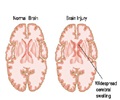
Head Injury | Brain Injury Overview Types Causes Symptoms Diagnosis Treatment
Head injury or traumatic brain injury is a leading cause of disability among children and young adults that leads to varying degrees of physical and mental stability. Fortunately, it is also one of the preventable brain disorder.
Head injury or traumatic brain injury is a leading cause of disability among children and young adults that leads to varying degrees of physical and mental stability. Fortunately, it is also one of the preventable brain disorder.
ICU mortality rates were 9.2 percent in the preintervention period and 7.8 percent in the postintervention period, with the difference also not significant after adjustment.
Advertisement
"There was a significant interaction between the tele-ICU intervention and severity of illness, in which tele-ICU was associated with improved survival in sicker patients but with no improvement or worse outcomes in less sick patients," the researchers said.
"Implementation of a tele-ICU was not associated with a reduction in overall hospital mortality for patients in these 6 ICUs. The lack of apparent benefit may be attributable to low decisional authority granted to the tele-ICU as well as to varied effects across different types of patients," they added.
The study has been published in the December 23/30 issue of JAMA.
Source-ANI
RAS