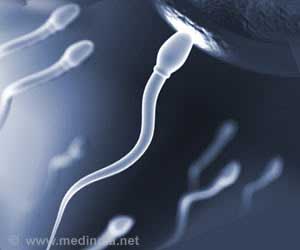
Sperm motility is an important factor in eventual fertilization of the ovum or the egg. Most of us probably think of sperm as rather active little cells, swimming with quick movements of their "tail" or flagella.
But actually sperm's motility is in fact short lived. When in the male reproductive tract they have to rest easy, lest they wear themselves out prematurely and give up any chance of ever finding an egg.
Artificial Insemination - Milestone Types Intrauterine FAQs
Artificial Insemination is a medical procedure usually used to treat infertility. In this procedure, sperm is placed into a female's vagina, uterus or fallopian tubes by artificial means.
Artificial Insemination is a medical procedure usually used to treat infertility. In this procedure, sperm is placed into a female's vagina, uterus or fallopian tubes by artificial means.
The findings offer new insight into a critical event in human fertilization and may lead to new ways of controlling male fertility, according to the researchers.
"The concentration of protons inside the [sperm] cell is 1,000 times higher than outside," said Yuriy Kirichok of the University of California, San Francisco. "If you just open a pore, protons will go outside. We identify the molecule that lets them out."

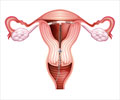
Ovulation - Calendar Symptoms Signs Pain Pregnancy Contraception FAQs
Ovulation is the time when an egg or ovum is released by female ovary, usually midway during the menstrual cycle. The ovulation calendar helps to calculate the time of ovulation.
Ovulation is the time when an egg or ovum is released by female ovary, usually midway during the menstrual cycle. The ovulation calendar helps to calculate the time of ovulation.
Kirichok said there are many conditions that open up the Hv1 pore, including alkaline conditions and the removal of zinc outside the cell. They also open when exposed to the endocannabinoid known as anandamide, a substance that is present in both the male and female reproductive tracts and that may be at particularly high levels in the vicinity of the egg.
Advertisement

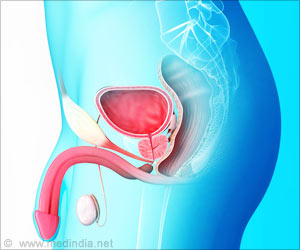
Journey of the Male Sperm
Interactive section of Medindia explains the journey of the sperm from testis to the outside world.
Interactive section of Medindia explains the journey of the sperm from testis to the outside world.
"Marijuana likely activates sperm prematurely, leaving them burnt out in a matter of hours," Kirichok said.
Advertisement

Intracytoplasmic Sperm Injection (ICSI)
Intracytoplasmic Sperm Injection (ICSI) is an assisted reproductive technological procedure performed under a microscope, which aids in the introduction of a single sperm into the cytoplasm of an egg.
Intracytoplasmic Sperm Injection (ICSI) is an assisted reproductive technological procedure performed under a microscope, which aids in the introduction of a single sperm into the cytoplasm of an egg.
"All of these events are essential to fertilization," Kirichok said. "You can imagine now that we know the molecule responsible we could block it to prevent activation and fertilization as a kind of male contraception." On the other hand, you might also give some sperm the extra boost they need.
Source-Eurekalert
RAS