Researchers at the Albert Einstein College of Medicine have found that the unwanted activation of an important cell-signalling pathway might play a role in two kidney problems that are major causes of end-stage renal disease.
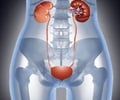
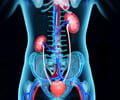
According to researchers, the study opens up a novel approach for treating kidney failure, reports Nature.The kidney filters waste products from the blood and maintains the body's fluid balance by producing urine. Numerous capillary tufts within the kidney known as glomeruli are responsible to carry out the filtration.
Kidney disease is caused when glomeruli is damaged and can no longer perform its filtering function. The damage may eventually progress to end-stage renal disease, in which patients need dialysis or a kidney transplant.
For the study, the research team, led by by Dr. Katalin Susztak, an assistant professor of medicine (nephrology) at Einstein, focused on cells known as podocytes that line the glomeruli.
Because dysfunction of podocytes cells is important in progressive kidney disease, and a cell-signaling pathway called Notch is crucial in podocyte development, the researchers reasoned that aberrant Notch signaling might play a role in causing kidney disease.
The Notch signaling pathway plays a crucial role in embryonic development of humans and most other multicellular organisms.
Advertisement
The researchers' observation during the study offers strong evidence that aberrant Notch signaling plays a role in diabetic nephropathy (DNP) and focal segmental glomerulosclerosis (FSGS)- the major culprits of end-stage renal disease.
Advertisement
Susztak and colleagues bred a strain of mice in which they could specifically activate the Notch pathway within podocytes.
The results showed that the podocytes in these mice underwent programmed cell death, and the mice themselves died from end-stage renal failure.
The researchers also found that after they induced glomerular disease in mice by injecting them with a toxic chemical, they were able to protect the rats from developing kidney disease by injecting them with a gamma secretase inhibitor, one of a class of compounds known to 'shut off' the Notch pathway.
Susztak and colleagues noted that gamma secretase inhibitors, similarly the one that protected the mice from kidney disease, are already in clinical trials for treating diseases including Alzheimer's and leukemia.
According to researchers, the findings "provide some hope that researchers in the field of kidney disease can reverse the grim record of the last 20 years - during which no new therapeutic agent has been successfully implemented" for treating end-stage kidney disease.
The study is published in the March issue of Nature Medicine.
Source-ANI
SRM/L